-
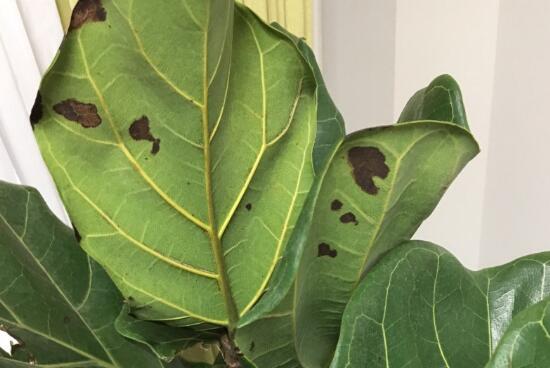
What to Do When Fiddle-Leaf Fig Leaves Develop Rust Spots? Causes and Notes on Watering and Temperature
The fiddle-leaf fig (Ficus lyrata), a beautiful foliage plant, has large, shapely leaves that look like a cello, and it stays green all year round, making it deeply loved by plant enthusiasts. But during cultivation, many growers find that their fiddle-leaf fig leaves develop rust spots, which seriously affects the plant's ornamental value, and they are eager to know what to do when fiddle-leaf fig develops rust spots
-
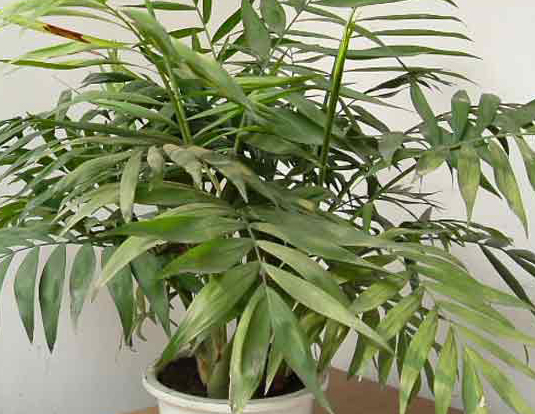
What should I do if the leaves of a parlour palm develop spots?
This is a disease caused by an unsuitable growing environment or improper care and management. The solutions are as follows: 1. Fungicides can be sprayed to control it; wettable powders such as chlorothalonil, carbendazim, thiophanate-methyl and zineb at 1000 times dilution are all suitable. 2. Place it in a semi-shaded spot or an environment with scattered light for care.
-
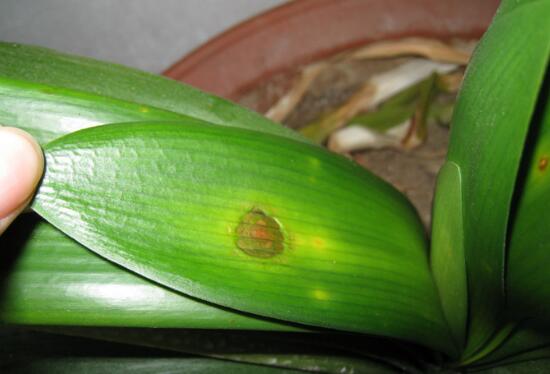
What to Do When Clivia Leaves Develop Spots? Spraying Fungicide, Changing Soil, and Reasonable Fertilization Are Key
The benefits of growing Clivia are something anyone who has kept one will deeply appreciate. Its leaves are thick, fleshy, and emerald green, making it highly ornamental, and it also has good feng shui significance, making it very suitable for indoor growing. However, during cultivation, for various reasons, the plant's leaves can develop spots. So what should you do when Clivia leaves develop spots? In response,
-
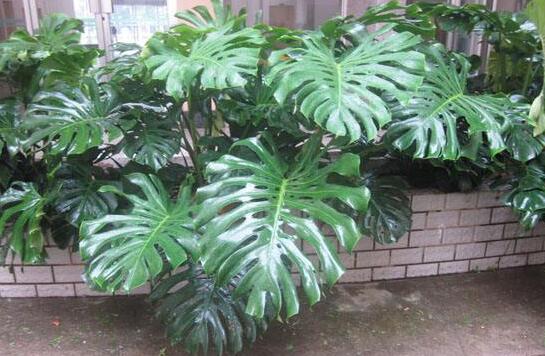
How do you get a Monstera deliciosa to develop leaf splits? Simply water it regularly, fertilize more, and increase light, and the problem is solved.
The leaves of the Monstera deliciosa are its most distinctive feature and one of the main reasons people love it. What makes the leaves so unusual is that they naturally develop splits once the plant reaches a certain stage of growth. However, some growers find that their Monstera deliciosa shows no sign of splitting for a long time.
-
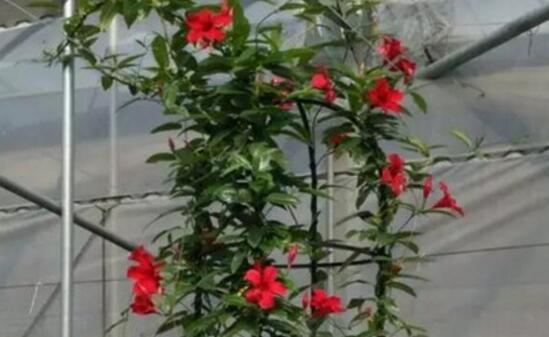
Necessity of pinching and topping Dipladenia, and why it only climbs without blooming, develops brown spots, and has yellow leaves
It is well known that Dipladenia has a relatively long blooming period among plants, but some people find that even in summer Dipladenia does not bloom, while its vine growth is unaffected. So why does Dipladenia only climb without blooming? What are the reasons Dipladenia does not bloom? Here the editor will answer them one by one for everyone.
-

A Detailed Explanation of the Origin and Development History of Black Tea ⟧2⟧Black tea originated in the Ming Dynasty in the 16th century. During the tea manufacturing process, it was discovered that sun-drying could replace the fixing (kill-green) step
Black tea originated in the Ming Dynasty in the 16th century. During tea manufacturing, it was discovered that sun-drying could replace fixation (kill-green), and after rolling the leaves turned red, thus producing black tea. The earliest black tea production began with Souchong black tea in Chong'an, Fujian. In the Qing Dynasty, Liu Jing's "Pian Ke Yu Xian Ji" records: "At the ninth bend of the mountain there is Xingcun town, where tea experts gather. Tea produced elsewhere in the province such as Shaowu and Jiangxi Guangxin, with black leaves and red soup, locally called Jiangxi Wu, is all privately sold to the various firms of Xingcun." After the appearance of Xingcun Souchong black tea, Congou black tea gradually evolved. In the 1920s, India crushed tea leaves during processing to make broken black tea, and in the 1950s our country also began trial production of broken black tea.
-
What are the causes of cotton abortive development and the remedial measures
Cotton abortive development occurs every year. So-called abortive development means that cotton has lost its normal reproductive function, that is, it only flowers but does not set bolls, or it flowers heavily but sets few bolls. The causes are first of all climatic factors, secondly the blind and indiscriminate introduction of cotton varieties, and thirdly cultivation methods that are incompatible with climate change. According to records, when the temperature exceeds 35°C, pollen development becomes deformed and normal pollination cannot occur; sustained drought then intensifies the shedding of squares and bolls. In addition, in mid-August some cotton areas experience a continuous week of rainy weather, which also makes it difficult for cotton to flower and pollinate normally.
-
New cotton variety Suza 3 successfully developed in Jiangsu
The new cotton variety "Suza 3", jointly bred by the Institute of Industrial Crops of the Jiangsu Academy of Agricultural Sciences and other institutions, has been successfully developed and recently passed national new variety approval in Jiangsu Province. It is reported that this is Jiangsu Province's first two-gene transgenic insect-resistant hybrid cotton. Tests show that it has strong resistance to common pests such as the cotton bollworm and the pink bollworm. According to experts, at present the insect-resistant cotton in the cotton region of China's Yangtze River basin generally has only a single insect-resistant gene - the "BT insect-resistant gene", while Suza 3, in addition to containing the above gene, also has the "C
-
What to do when cotton develops red leaf blight during the boll-setting stage
Control measures for cotton red leaf blight: 1. Apply fertilizer reasonably, and skillfully apply the cotton topping fertilizer; nitrogen, phosphorus and potassium should be applied together or foliar fertilizer should be applied. 2. Strengthen field management, cultivate frequently, improve root respiration conditions, promote root development, prune and remove side branches in time, remove old leaves and control pests and diseases. 3. Spray for protection, using 70% mancozeb or 75% chlorothalonil 600-800 times solution or 70% thiophanate-methyl 800-1000 times solution plus foliar fertilizer (potassium dihydrogen phosphate, Lvzhiyuan, etc.) for spraying, once every 5-
-
A Complete Analysis of the Tea Plant's Total Development Cycle, Explained in One Article
The entire life period of a tea plant, from seed germination all the way to aging and death. According to the growth and development characteristics of the tea plant, it can be divided into four biological age stages, namely: seedling stage, young stage, mature stage, and aging stage. Seedling stage: from seed germination and the emergence of seedlings above ground to the end of the first growth when a resting bud forms, this is the seedling stage. Generally, it starts from seed germination in March of that year and ends in July, totaling about 4 to 5 months. During the seedling stage, attention should be paid to keeping the soil loose and moist so that seed germination can obtain sufficient air
条件筛选