-
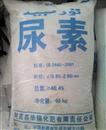
What exactly is the difference between urea ammonium and urea?
What are the differences between urea ammonium and urea? Is urea ammonium more effective than urea? We'd also like experienced netizens to help explain. Nitrogen-containing fertilizers such as urea ammonium, urea, ammonium sulfate, ammonium bicarbonate, ammonium chloride and ammonium nitrate are all nitrogen fertilizers, but the utilization rate of nitrogen fertilizers varies greatly, so the effects after use differ. 1...
-
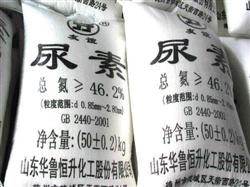
Why is ammonium bicarbonate more effective as a fertilizer than urea in winter and spring?
Why is urea less effective as a fertilizer in winter and spring? Why should ammonium bicarbonate be used instead of urea in winter and spring? We invite knowledgeable readers to share their insights. Urea is a high-concentration nitrogen fertilizer, a neutral quick-acting fertilizer, and can also be used to produce various compound fertilizers. Urea is the most common and the most abundant nitrogen fertilizer variety, which...
-
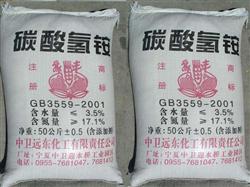
What is the reason that applying ammonium bicarbonate in spring gives good results?
What are the characteristics of ammonium bicarbonate? What effects does applying ammonium bicarbonate have? Why is the effect good when used in spring? Experienced netizens are also asked to give a brief introduction. 1. Fast fertilizer effect: Compared with urea, ammonium bicarbonate differs in that urea cannot be directly absorbed by crops after being applied to the soil, and under suitable conditions it still needs to undergo a series of transformations before...
-
What are the functions of zinc sulfate? Explained clearly in one article
What are the functions of zinc sulfate? What are the common types of zinc sulfate? How is zinc sulfate applied? We also ask knowledgeable readers to help explain. The correct use of zinc sulfate can prevent diseases in fruit tree nurseries, and it is also a commonly used fertilizer for supplementing the trace element zinc in crops; it can be used as a base fertilizer, foliar fertilizer, etc. Therefore, Zhongdiwang has compiled...
-
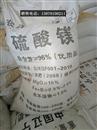
What are the functions and benefits of magnesium fertilizer? Read this one article to understand
What are the functions of magnesium fertilizer? How should magnesium fertilizer be applied? We ask netizens to help explain. Magnesium fertilizer generally refers to fertilizer containing the element magnesium, which after application can provide magnesium to the soil. The more common fertilizers containing magnesium include magnesium sulfate, magnesium chloride, magnesium carbonate, magnesium nitrate, magnesium oxide, magnesium phosphate fertilizer, etc. Therefore, Zhongdi Web has compiled...
-
What is the usual concentration for foliar fertilization? Understand it in one article
Which fertilizers can be used for foliar fertilization? What concentration is suitable? Experienced netizens are also asked to help introduce the fertilizers often used for crop foliar spraying (root-outside topdressing), including manganese sulfate, zinc sulfate, rice vinegar, ammonium molybdate, potassium dihydrogen phosphate, urea, copper sulfate, plant ash, superphosphate and borax. The above fertilizers used as...
-
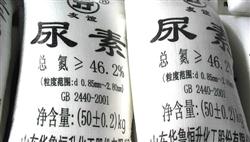
Introduction to the correct use of nitrogen fertilizer synergists
What nitrogen fertilizer synergists are there? How do you use nitrogen fertilizer synergists? We ask experienced readers to help explain. Nitrogen fertilizer synergists are also called nitrification inhibitors; their composition is a class of organic chemical substances, and their actual nature is that of some fungicides. Mixing nitrogen fertilizer synergists with nitrogen fertilizer and applying them to farmland can reduce nitrogen fertilizer losses caused by denitrification...
-
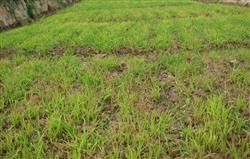
What are the precautions for using chloride-containing fertilizers?
I heard that chloride-containing fertilizers can burn crop roots? So what should be noted when applying chloride-containing fertilizers? Please share your experience. Currently in China, chloride-containing fertilizers are a category with relatively large production and application amounts, but different crops vary in their sensitivity to chloride. For example, some plants are extremely sensitive to chloride ions, and when uptake reaches a certain level, it can noticeably affect yield and quality. These plants are usually called chlorine-sensitive plants.
-
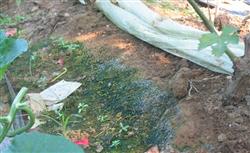
What are the harms of excessive application of organic fertilizer to vegetables?
What are the harms of excessive application of organic fertilizer to vegetables? How can excessive application of organic fertilizer be prevented and controlled? We also ask experienced netizens to help explain. Organic fertilizer can improve the physical and chemical properties of soil, enhance water and fertilizer retention, and improve the ability to supply fertilizer continuously, but excessive application of organic fertilizer can also affect the physical and chemical properties of soil, and in severe cases can cause...
-
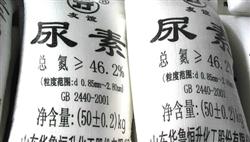
What types of flush fertilizers are commonly used for vegetables?
Which flush fertilizers are commonly used for vegetables? What should be noted when applying them? We also ask experienced netizens to help explain. In the process of growing vegetables, using flush fertilizers can quickly and effectively provide nutrients to vegetables, so as to promote vegetables to come to market earlier. Therefore, Zhongdiwang has compiled the commonly used flush fertilizers for vegetables and the precautions, listed below...
条件筛选