How to Grow and Care for Pitcher Plants: Key Points
Pitcher plant is the general name for all species in the genus Nepenthes. They are tropical carnivorous plants, native mainly to the Old World tropics. They have a unique organ for absorbing nutrients, the pitcher, which is cylindrical, slightly swollen in the lower half, with a lid over the pitcher mouth. They are named for their resemblance to a pig cage.
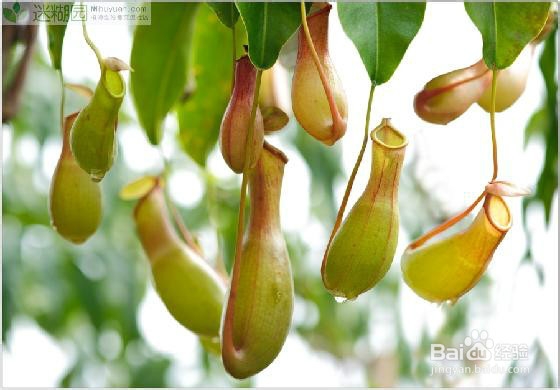
How to Grow Pitcher Plants
Soil: A loose, fertile, well-aerated leaf mold or peat soil is best. For container growing, a mixed substrate of peat soil, sphagnum moss, charcoal and fir bark shavings is commonly used.
Watering: Pitcher plants are quite sensitive to moisture. They can only grow and develop normally under high humidity, so during the growing season they need frequent misting, 4 to 5 times a day. If the temperature fluctuates greatly or the air is too dry, the formation of the leaf pitchers will be affected.
Sunlight: Pitcher plants like sunlight, but they are afraid of direct strong light. So in summer, be careful about sun protection; the usual method is to put up a shade net. Too little light is also bad: it causes slow growth, weak and spindly plants, and smaller pitchers or no pitchers at all.
Temperature: The suitable growing temperature for pitcher plants is 25-30°C; from March to September it is 21-30°C, and from September to March of the following year it is 18-24°C. In winter the temperature should not be lower than 16°C; below 15°C the plants stop growing, and below 10°C the leaf edges suffer frost damage.
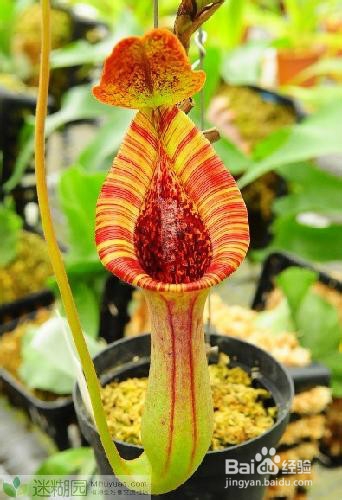
Fertilizing: Generally, apply organic fertilizer to pitcher plants and water promptly after fertilizing. If you have no organic fertilizer, or you dislike organic fertilizer, you can apply a little chemical fertilizer, but the amount must be kept low. Applying too much fertilizer at one time will cause the plant to wither, as if it were short of water. Besides these fertilizers, you can also apply foliar fertilizer, which takes effect relatively quickly.
Pests and diseases: Pitcher plants are often harmed by leaf spot disease and scale insects. For leaf spot disease, spray with a 1000-fold dilution of 50% zineb wettable powder. For scale insects, spray with a 2000-fold dilution of 40% dimethoate emulsifiable concentrate.
Pruning: The pitcher of a pitcher plant is a modified leaf, so like the leaves of other plants it will also age and die. Generally speaking, under suitable conditions each pitcher can survive for several months. When it has withered, you can cut it off to make the whole plant look better, but this is purely for appearance and has nothing to do with the health of the plant.