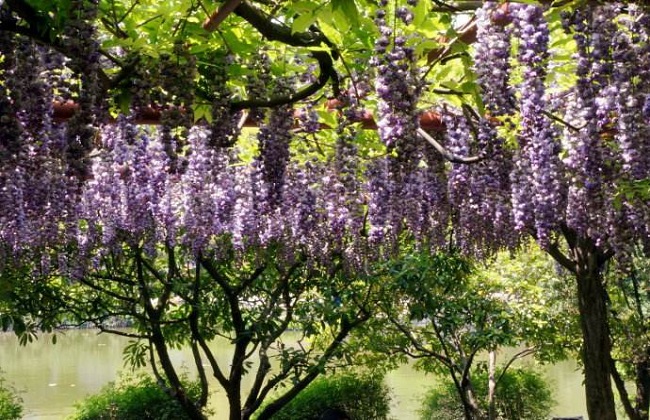
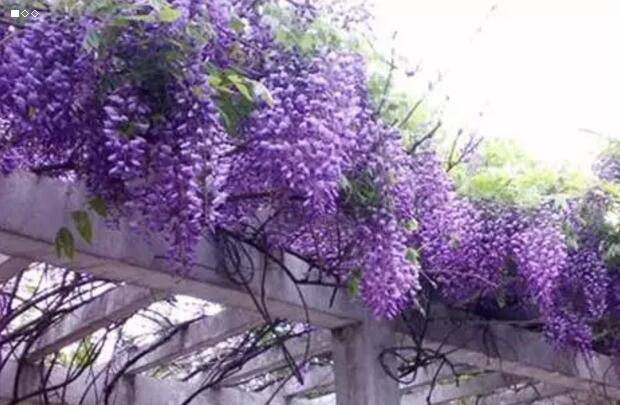
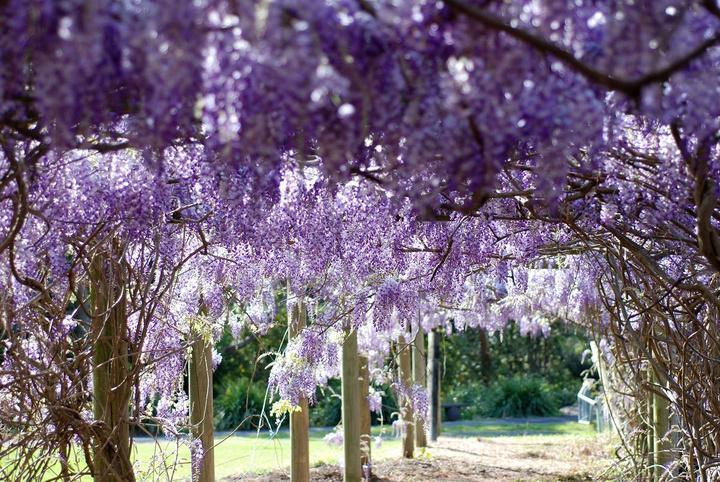
Wisteria, also known as tengluo, zhuteng, and huanghuan. It belongs to the Fabaceae family and the Wisteria genus, and is a deciduous climbing twining large woody vine. The bark is dark gray and does not split; it blooms in spring, with blue-purple papilionaceous corollas, and the flowers are purple or deep purple, very beautiful. Wisteria is a warm-temperate and temperate plant, with strong adaptability to the growing environment. The purple tassels sway in the wind, exceptionally lovely. Even now, wisteria is still quite popular, especially in certain leisure parks or shaded sidewalks, where it is particularly favored.
Propagation Methods
Cutting Propagation
Cutting propagation generally uses hardwood cuttings. Before the branches sprout in mid-to-late March, select robust 1- to 2-year-old branches, cut them into cuttings about 15cm long, and insert them into a previously prepared seedbed, with the insertion depth at 2/3 of the cutting length. After inserting, spray water, strengthen care, and keep the seedbed moist; the survival rate is very high, and the plant height can reach 20-50cm in the same year, and they can leave the nursery after two years.
Root cutting makes use of the fact that wisteria roots readily produce adventitious buds. In mid-to-late March, dig out roots 0.5-2.0cm thick, cut them into cuttings 10-12cm long, insert them into the seedbed, and keep the insertion depth so that the upper cut end of the cutting is level with the ground. Other management measures are the same as for branch cuttings.
Seed Propagation
Seed propagation is carried out in March. Collect seeds in November, remove the pod skins, dry them in the sun, and store them in bags. Before sowing, soak the seeds in hot water; when the boiled water temperature drops to about 30°C, remove the seeds and rinse them briefly in cold water, then keep them moist and pile them for a day and a night before sowing. Alternatively, store the seeds in damp sand and soak them in clean water for 1-2 days before sowing.
Layering, division, and grafting are all carried out in mid-to-late March.
Field Management
Watering: Wisteria has a very deep main root, so it has strong drought tolerance, but it likes moist soil; however, the roots must not be soaked in water, otherwise they will rot.
Fertilizing: Applying compound fertilizer 2-3 times a year is basically enough to meet wisteria's needs. Before sprouting, nitrogen fertilizer,
superphosphate, etc. can be applied. During the growing period, topdress 2-3 times with
decomposed human manure and urine.
Soil: Wisteria has a long main root, so the planting site needs deep soil. Wisteria tolerates poor soil, but fertile soil is more favorable for growth. Wisteria also has strong adaptability to soil pH. A high, dry location with deep soil, fertile soil, and good drainage should be chosen; excessive moisture easily causes root rot.
Propagation: Wisteria can be propagated by cuttings, layering, sowing, grafting, tillering, and other methods. For potted wisteria, in order to maintain a beautiful tree shape, fertilizer and water should be controlled so that the plant does not grow too large, and pruning and pinching should be strengthened. Each year, when new shoots have grown about 15cm long, pinch them once, and after flowering, prune heavily once.
Fertilizing: Wisteria has a strong taproot, so when transplanting, dig up as many lateral roots as possible and keep soil around them.
Pruning: Generally, pruning can be done during wisteria's dormant growth period; the planting density of wisteria needs to be adjusted, and part of the wisteria should be properly cut back on the original basis to ensure stable planting density. In addition, the new branches grown by wisteria should be properly pruned, about one-half to one-third, with specific consideration based on the actual situation.