Detailed Guide to Cane Begonia Planting Methods and Care Points
Cane Begonia (Begonia maculata) is a perennial herbaceous plant of the Begoniaceae family and the genus Begonia, growing upright or as a loose subshrub, blooming in summer and autumn, with soft and lovely leaf colors.
Propagation Methods of Cane Begonia
1. Choosing the Mother Plant
Friends should first select a relatively robust Cane Begonia in advance, taking care that it shows no signs of any disease. In addition, friends should not choose old branches, because such branches do not have strong vitality; instead, choose relatively tender stems.
2. Pruning
Put the scissors in a pot and boil them for about two quarter-hours, and once they are dry, you can prune. Friends should try to cut about 15 cm from the top of the stem, as only then can you be sure it will survive.
3. Cutting
Insert the cut stem into the prepared soil, taking care not to push it in too deep; about 5 cm is enough. When mixing the soil, friends should also pay attention: you can add more vermiculite so that root rot is less likely, then add some peat, and in about two weeks fine roots will grow.
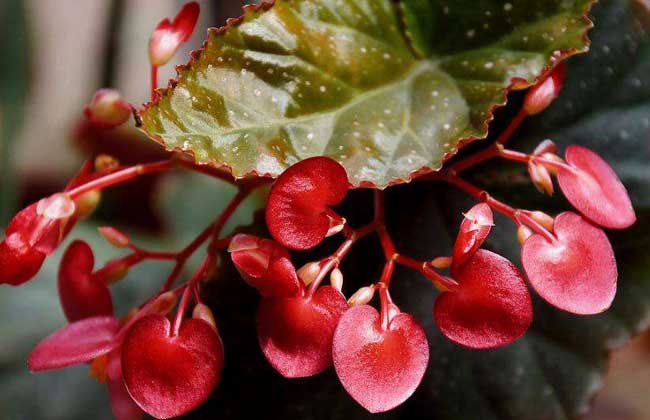
Planting Methods of Cane Begonia
1. Soil: The soil commonly used for growing Cane Begonia is made by mixing compost soil, leaf mold and charcoal soil. Alkaline, heavy, or easily compacted soil is not good for new root growth, and can easily lead to short stems and leaves, dull colors, and chlorosis.
2. Temperature: Cane Begonia grows quickly in a warm environment, with lush stems and leaves and bright flowers. The suitable growing temperature is 19-24°C, and the winter temperature should not be lower than 10°C, otherwise the leaves are easily damaged by cold, though the rhizome is relatively cold-tolerant.
3. Watering: Cane Begonia likes a semi-shaded, mild and humid environment, and is strongly drought-resistant, but it fears waterlogging, so watering should follow the principle of watering when dry and letting it dry out between waterings, with the best result being to keep the potting soil moist. In the midsummer season, the leaves and the ground need to be sprayed with water.
4. Fertilizing: Cane Begonia likes fertilizer. Fertilizing should be done by hoeing when the potting soil is dry, and watering after fertilizing makes it easier for the plant to absorb. During the vigorous spring growth period, apply a dilute liquid fertilizer once every 10 to 15 days. In the high-temperature summer season, fertilizing should be reduced, and fertilizing is paused during the flowering period and in winter.
5. Light: Cane Begonia prefers shade and fears exposure to strong sun, so it is suitable for year-round cultivation on an indoor south-facing balcony. In spring, autumn and winter, it should be given sufficient sunlight, while in summer strong light should be avoided, otherwise the plant's leaves will turn yellow and growth will be slow.
6. Pruning: Cane Begonia grows vigorously. For plants grown for many years, or plants that have grown too tall, or where leaves at the lower part of the stem have fallen off, making the plant shape unattractive and affecting the ornamental effect, pruning can be combined with repotting in spring to help the plant sprout new branches.


Notes on Cane Begonia
1. Do not apply heavy fertilizer when Cane Begonia is being repotted or when its stems and leaves are not vigorous, otherwise it will burn the roots. During the vigorous growth period, apply a dilute liquid fertilizer once every two weeks.
2. After Cane Begonia has grown for many years, the leaves at the bottom will turn yellow and fall off, affecting the plant's attractive shape, so pruning can be done when repotting in spring.
3. In summer, Cane Begonia likes sufficient scattered light. When temperatures are high, if the light is too strong, it easily causes dry leaf tips and scorched edges, yellowing leaves, and even leaf drop.
4. In summer, placing Cane Begonia in too dark a place will not only reduce the number of leaves and flowers, but also cause the plant to grow leggy.
5. During the vigorous summer growth period, Cane Begonia needs to keep the potting soil moist but not overly wet, and especially avoid water accumulating in the pot, otherwise it will cause root rot and death.
6. During the growth process, Cane Begonia may suffer from pests and diseases, so prevention should be the priority, with integrated control. If pests and diseases are found, treat them as early as possible.