Detailed Guide to Leptospermum scoparium Planting Methods and Care Techniques
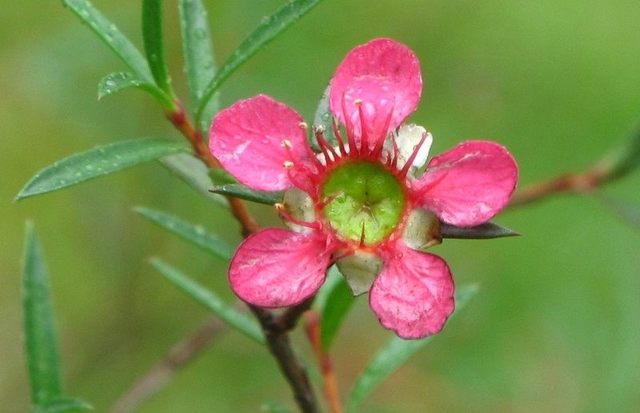
More and more flower enthusiasts are now captivated by Leptospermum scoparium (New Zealand tea tree). Its flowers are very beautiful, semi-double. It gets its name because its leaves resemble pine needles and its flowers resemble red plum blossoms, and because its double-petaled flowers look like peonies, it is also called "pine-leaf peony". Although its flowers are not large, the colors are vibrant and the flower shapes are exquisite. So, is Leptospermum scoparium easy to grow? Today we will introduce the cultivation methods for Leptospermum scoparium.
Leptospermum scoparium is not drought-tolerant. If it lacks water, its leaves and flowers will fall off like snow, so the first requirement for growing it well is knowing how to water. This plant cannot dry out. Soaking the pot in water is recommended for watering.
Of course, light is also a key point that cannot be overlooked. Leptospermum scoparium likes an environment with ample light, so the growing environment must have plenty of sunlight. However, in summer, attention must be paid to shading; it cannot be exposed to harsh sun.
If growing Leptospermum scoparium on a balcony, be sure to pay attention to ventilation. A closed balcony is much harder to manage than an open balcony. This applies not only to Leptospermum scoparium but to other plants as well.
As long as you get watering, light and ventilation right, Leptospermum scoparium is not that difficult to grow.
Keeping Leptospermum scoparium alive is not the end goal; growing it well is what matters. During its growth, Leptospermum scoparium also needs pruning. It is quite tolerant of pruning and has strong branching ability, so there is no need to worry about pruning it badly.
Start pruning from the young plant stage to encourage continuous new shoot growth and control a reasonable plant shape. After 1 to 2 years, it can be shaped into a beautiful form, with abundant blooms and dense branches covered in flowers.

During shaping and pruning, two points need attention. First, aside from thinning out some branches that affect the plant shape, other branches should not all be cut off; generally keep 1/3 to 1/2. If pruned too heavily, leaving only already lignified branches, it will be difficult for the plant to recover growth. Second, fertilize immediately after each pruning, mainly with phosphorus and potassium fertilizers, controlling the amount of nitrogen fertilizer to promote flower bud differentiation and ensure blooming the following year.
