A Detailed Guide to Azalea Planting Methods and Key Technical Points
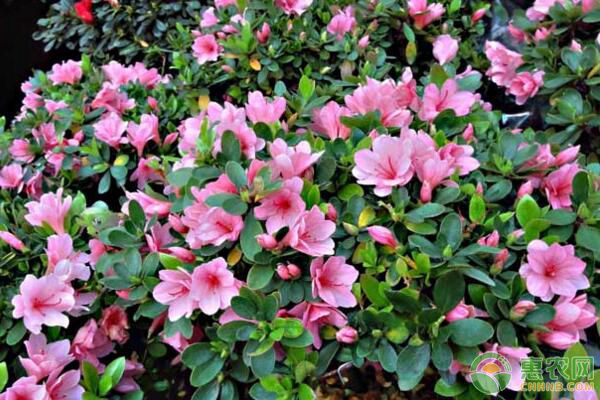
The azalea is a world-famous flower and one of China's top ten famous flowers. There are about 900 species of azaleas in the world, and China has more than 530 species. Because azaleas are dwarf plants that bloom in all four seasons, with double flowers, their ornamental value is extremely high.
Growing Methods
1. Pot and Soil Selection
For cultivating azaleas, clay pots and purple clay pots are mostly used. Clay pots have good breathability and are used for growing seedlings, while purple clay pots are attractive in appearance and are used for established plants, which can enhance ornamental value. Azaleas prefer loose, fertile, weakly acidic soil and are not suited to alkaline soil that is rather sticky and poorly aerated. Leaf mold, peat soil and garden soil can be blended to make a growing medium, and a small amount of bone meal can be added when potting to increase the minerals in the soil.
2. Temperature
The optimal growing temperature for azaleas is 12-25 degrees. When the summer temperature exceeds 35 degrees, they enter a semi-dormant state, and new branches and new leaves grow slowly, so in summer they should be properly shaded from the sun. Their cold resistance is rather weak, and below 0 degrees they are prone to frost damage, so in winter attention must be paid to keeping them warm and protected from the cold. For those grown outdoors, measures should be taken well; it is recommended to move them indoors and keep the temperature above 5 degrees, so that they can overwinter safely.

3. Watering
Watering should be done in the morning and evening; especially in the hot summer, it is even more unsuitable to water at noon. This is because after the roots are stimulated by cold water, the flowers will be harmed. The principle of watering is: do not water if the soil is not dry, and when watering, water thoroughly, strictly avoiding half-watering. Spring and autumn are the periods of growth, flowering and bud formation for azaleas, so the water supply should be somewhat greater, but during the flowering period it must not be watered too much; too much water will make the flowers wither early.

4. Fertilizing:
The azalea is a flower that does not need heavy fertilizer. If fertilizer is applied too much or too concentrated, it will instead be harmful to its growth. But this is not to say that no fertilizer should be applied; to make it bloom abundantly and with large flowers, it is still necessary to apply some fertilizer at the right time and in the right amount. Therefore, flower-growing experts have summed up the experience of fertilizing in 8 words: "apply dry fertilizer sparingly, apply liquid fertilizer thinly." This is very appropriate and worth the reference of flower growers. Under normal circumstances, 1- to 2-year-old seedlings do not need fertilizer, because the fertility contained in the humus soil is already enough to supply the needs of seedling growth and development. For small plants 2-3 years old, from late spring or early summer, a dilute cake fertilizer water or dilute alum fertilizer water can be applied once every 10-15 days. For plants over 4 years old, about 20 grams of dry cake fertilizer can be applied in spring and autumn each year. In mid-June, a quick-acting phosphorus and potassium fertilizer can be applied once to promote flower bud differentiation. After June, fertilizing can be stopped. After the flowers fade, which is exactly when new branches are growing, a liquid fertilizer of slightly higher concentration can be applied once, but it must not be applied too concentrated, and raw fertilizer must not be applied, otherwise the root system will be damaged. Applying too much fertilizer in summer will cause old leaves to fall off and new leaves to turn yellow. It is particularly worth noting that for azaleas grown at home, the most likely problem is not a lack of fertilizer in the plant, but damage caused by excessive fertilizing. If situations such as yellowing and withering of leaves occur due to too much fertilizer, fertilizing must be stopped immediately, the dry fertilizer removed, and more water applied to wash away the fertilizer accumulated in the soil. After watering, move the plant to a ventilated place for care; some need to be rinsed 2 times. In this way, after half a year they can gradually grow normally.
Precautions
1. Pruning
Azaleas have strong sprouting and regenerative ability. Every 1-2 years after the flowers fade, they should be moved into a pot somewhat larger than the original one, along with fresh growing medium. Experienced flower growers often combine pruning and shaping with repotting, consciously pruning out an attractive tree form. When pruning, branches that are too dense, crossed, weak, drooping, leggy, or diseased and pest-infested should be cut off. This is not only for the beauty of the tree form, but even more to improve ventilation and light penetration, save nutrients, and promote strong main branches, so that new shoots can sprout as quickly as possible, achieving the goal of abundant flowers, large flowers and vivid colors when blooming the following year.

2. Loosening the Soil and Repotting
Long-term watering causes the soil to become compacted. After the soil is compacted, aeration is poor, which is not good for plant growth, so potted plants need the soil loosened once every month or two. Azalea growth consumes nutrients, and the nutrients needed for growth all come from the soil, so the potting soil needs to be replaced once every one to two years, removing the old soil and replacing it with fertile new soil. Only then can it grow healthily.

3. Diseases and Pests
The main diseases of azaleas include root rot, brown spot, black spot, leaf blight and iron-deficiency chlorosis. Before planting, disinfect the potting soil and keep the soil loose, moist and well aerated. When diseased plants are found, deal with them promptly. Common pests of azaleas include red spider mites, lace bugs, aphids and short-bearded mites. When found, promptly spray with insecticide to kill them.
