A Complete Guide to the Methods and Key Technical Points of Wood Ear Mushroom Cultivation
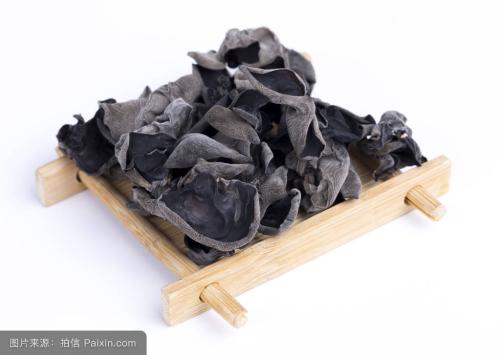
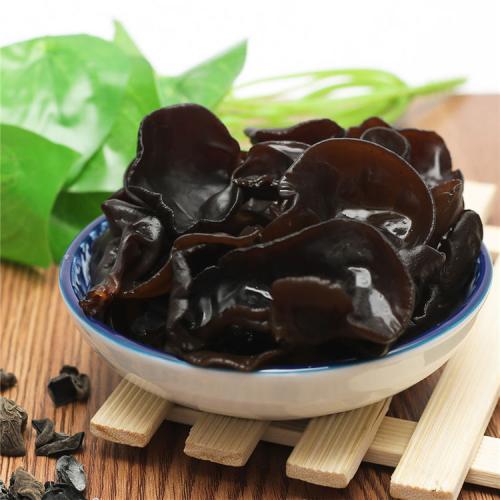
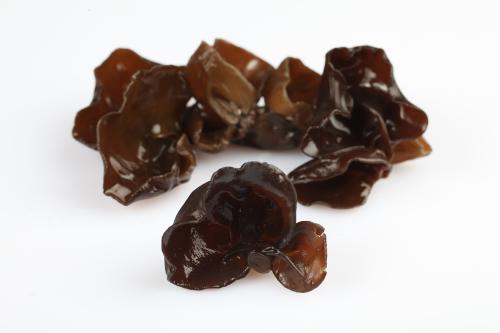
Wood ear mushroom (English: agaric) grows mainly in China and Japan. In China, most of it is Northeast wood ear and Qinling wood ear. Wood ear can be both wild and artificially cultivated. The fruiting body is ear-shaped, leaf-shaped or cup-shaped, thin, with wavy edges, 3-10 cm wide and about 2 mm thick, attached to the substrate by a short lateral stalk or a narrow, slender attachment base. The color is dark brown, the texture is soft and gelatinous, thin and elastic, semi-transparent when moist, and shrinks when dry to become brittle and hard, keratinous and almost leathery. It has a delicious taste, can be served as a vegetarian or meat dish, and is rich in nutrients. Wood ear is sweet in flavor and neutral in nature, and has many medicinal effects. It can boost qi and strengthen the body, has blood-activating effects, and can prevent and treat iron deficiency anemia and the like; it can nourish blood and preserve youthfulness, making the skin rosy and the complexion radiant, and it can clear the stomach and intestines and lubricate the intestinal tract, while also being somewhat helpful for patients with high blood pressure.
Cultivation techniques:
1. Log cultivation
(1) Tree selection: There are many tree species suitable for the growth and development of black wood ear. However, one should adapt to local conditions and choose tree species that are abundant in local resources and also easy for wood ear to grow on. Apart from tree species containing pine resin, essential oils, alcohols, ethers and the like, and economic forest trees, all other tree species can be used to cultivate wood ear. Currently common tree species include cork oak, Mongolian oak, Mongolian oak, warty birch, Castanopsis carlesii, Chinese wingnut, sweetgum, elm, black locust, willow, Catalpa, plane tree, and Coptis chinensis wood, among others. But cork oak and Mongolian oak are the best.
(2) Felling trees: The historical custom is to fell trees during the "entering the nines" period. Generally speaking, felling can be carried out from when the leaves turn yellow and wither until before new leaves sprout, because this period is precisely the tree's "dormant" period, when the nutrients in the trunk are in a state of accumulation and not flowing, with less water and the most abundant and concentrated nutrients. This is called felling "shoujiang trees" (trees that have collected their sap). At the same time, trees felled during this period have bark and wood closely bound together, so after felling the bark does not easily come off, which is beneficial to the growth and development of black wood ear.
As for the age of trees to be felled, those growing on sunny slopes should be 7-8 years old, and those growing on shady slopes or in poorer soil should be 8-10 years old. The best trunk thickness is around 10 cm, and the length is 1 m. One rack holds 50 logs.
(3) Pruning branches: After the tree is felled, do not prune the branches immediately. Keeping the branches and leaves can accelerate the evaporation of water from the tree, prompting the trunk to dry quickly and causing its cell tissues to die, while also helping the nutrients in the treetop concentrate in the trunk. Wait 10 days to half a month before pruning the branches. When pruning, use a sharp machete and cut from bottom to top, pressing close to the trunk and shaving flat, cutting into "copper coin scars" or "ox eye scars". Do not cut too deep and damage the cortex. It is best to smear the scars after cutting with limewater to prevent the invasion of miscellaneous bacteria and water accumulation, and also to facilitate stacking and laying out.
2. Field planting management
After inoculation, in order to maintain relatively high temperature and humidity and sufficient air, so as to promote the spawn to colonize and establish in the wood ear logs early and increase the survival rate, the wood ear logs must be stacked. The method is to arrange the inoculated wood ear logs into a "well"-shaped frame, stacked layer by layer into a small pile one meter high, with dry and wet thermometers hung inside the pile, tightly covered around with plastic film, with the pile temperature controlled between 22-28 degrees C, the relative air humidity maintained at about 80%, and 5-6 cm gaps left between the wood ear logs to allow good ventilation. After stacking, turn the pile once every 6-7 days, swapping the positions of the wood ear logs from top to bottom, left to right, inside and outside, so that temperature and humidity are consistent and the whitening is uniform. If the wood ear logs are dry, water can be sprayed appropriately to adjust, and after the bark is slightly dry, cover again with plastic film. When the temperature is high, uncover the film once every 3-5 days at noon for ventilation, combined with spraying water to lower the temperature. Generally after 3-4 weeks of stacking, the black wood ear mycelium has grown into the wood ear logs, and then the pile can be broken up and laid out.
3. Breaking up the pile and laying out
Breaking up the pile and laying out is a continuation of stacking, with the purpose of allowing the mycelium to spread deep into the wood ear logs and rapidly shift them from the growth stage to the development stage. The site for laying out requires sunlight and moisture, with appropriate shading. When laying out, place the wood ear logs one by one flat on the ground where there is short grass. If it is bare soil, first lay a small wooden pole horizontally, then place the wood ear logs one by one with their ends on the ground and laid on the horizontal pole, with each wood ear log 6-8 cm apart. This not only helps absorb ground moisture, receive sunlight, rain and dew and fresh air, and promote the growth of ear buds, but also avoids all the wood ear logs sticking to the ground, which would cause excessive moisture, smother the spawn, and splash mud onto the wood ear logs. During the laying-out stage, the wood ear logs should be turned about once every 10 days, and water should be sprayed to regulate humidity. After more than a month, when a large number of ear buds appear, they can be put on racks.
4. Fruiting management
Water management
After the wood ear logs are put on racks, it is already midsummer, with high temperatures and dry weather, so automatic sprinkler irrigation should be used in time for watering. Long and fine spraying is required so that the wood ear logs absorb enough water and promote the occurrence of ear buds. During the period when the ear pieces are growing, more water should be sprayed; in dry and high-temperature seasons, more should be sprayed; on cloudy days, less should be sprayed; during the resting period of the wood ear, no spraying should be done. Spraying should be carried out in the morning and evening.
Picking and sun-drying the ears, and post-picking management
After about 1 week of water management, if the ear pieces are seen to be flat and spread out, the ear base has become thin, the color has faded, and the wood ear logs tremble, pick them in time on a clear morning when there is dew, holding the ear base and rotating left and right. For spring and autumn ears, pick the large ones and leave the small ones. For summer ears, because high temperatures easily cause diseases and insect pests leading to rotten ears and flowing ears, they must be picked regardless of size. After picking, the wood ear should immediately be spread on drying mats and placed in a place with strong sunlight and good ventilation to dry. After each harvest, spraying should be stopped for 3-5 days or longer to promote the mycelium to grow deeper, and then water management should be carried out again. Only in this way, alternating dry and wet, is it beneficial to mycelial growth, nutrient accumulation, ear bud occurrence, and high yield and quality.
Nutritional composition
According to modern scientific analysis, the nutritional composition of black wood ear is that every 100 grams of dried product contains 10.6 grams of protein, 0.2 grams of fat, 65 grams of carbohydrates, 7 grams of crude fiber, 375 milligrams of calcium, 201 milligrams of phosphorus, 185 milligrams of iron, and in addition contains 0.15 milligrams of vitamin B1, 0.55 milligrams of vitamin B2, and 2.7 milligrams of niacin. Therefore, black wood ear has always been deeply loved by the broad masses of the people, often used as an ingredient in cooking various famous Chinese and Western dishes, or stewed with red dates and lotus seeds and sugar as a wonderful snack suitable for all four seasons. It is not only crisp and delicious, smooth and refreshing to the throat, but also has the effect of increasing appetite and nourishing and strengthening the body. Black wood ear has a certain adsorption capacity; it has the effect on the human body of clearing the stomach and intestines and digesting cellulose. Therefore, it is also an indispensable health food for textile workers, mine workers and barbers.