Detailed Explanation of Shiitake Mushroom Cultivation Methods and Technical Key Points
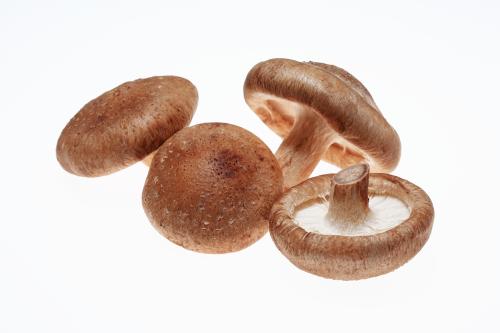
Shiitake mushroom, also known as huagu, xiangxun, xiangxin, xiangjun, donggu, and xianggu, is the fruiting body of the fungus Xiangxun (Lentinula edodes) in the family Pleurotaceae. The shiitake mushroom is the world's second-largest edible fungus and is also one of China's local specialties, long known among the people as a "mountain delicacy." It is a fungus that grows on wood. It has a delicious taste, an inviting aroma, and is rich in nutrients. Shiitake mushrooms are rich in B vitamins, iron, potassium, and provitamin D (which converts to vitamin D after sun exposure); its taste is sweet and its nature is neutral. It is mainly used to treat loss of appetite, shortness of breath, and fatigue.
Key points of watering:
First, the timing of watering, early or late. After the mushroom sticks are taken out to the field and the sticks are arranged, there are two management models. One is to remove the plastic bag first, produce a batch of mushrooms, and then water. The other is to water first, and then remove the bag to produce mushrooms. The use of these two methods is determined by the weight of the mushroom stick. If the mushroom stick is still heavy, generally for a 15-55 bag, when the moisture is above 3 jin, it is suitable to remove the bag and produce mushrooms first, and then water. If the mushroom stick is light, generally for a 15-55 bag, when the moisture is below 2.8 jin, it is suitable to water first, and then remove the bag to produce mushrooms. For the mushroom stick to be watered, first the mushroom stick must be mature. Only after judging that the mushroom stick is mature can the bag be opened or water be added to produce mushrooms. If the mushroom stick is not mature and water is added to produce mushrooms, that will increase the difficulty of management, and the mushroom stick will rot, and the core will rot. Ultimately this leads to great losses. If the mushroom stick is producing mushrooms, especially the first flush of mushrooms, the moisture of the mushroom stick is not high, and the mushroom stick is prone to water shortage. When the mushroom stick produces many mushrooms, the only moisture in the mushroom stick is drawn out by the mushrooms produced, and the moisture of the mushroom stick will evaporate along with the shiitake mushrooms produced, so the mushroom stick will be extremely short of water. At this time, if water is not added, the mycelium in the mushroom stick will, because of severe water shortage, become thin and weak, and its vitality will decline. In this way, because the mycelium is thin and small, the mushroom stick will become soft and not hard, and is prone to falling apart. The mushrooms produced are also small in size and thin in flesh. The yield of the mushroom stick will also be very low. Therefore, when the mushroom stick is producing mushrooms in large quantities (which often happens in the first flush of mushrooms), before this flush of mushrooms has finished (when it is about to end), water must be added in time to replenish moisture, otherwise the mycelium will lose vitality, and the mushroom stick will not be able to recover all at once. If it is not managed well, there will be no yield, leading to failure in mushroom cultivation.
Second, the amount of watering, light or heavy. In the process of mushroom cultivation, the amount of watering is very crucial. If it is too little, no mushrooms will come out; if it is too much, the stick will rot. Especially at the first watering, autumn-planted sticks often coincide with the tenth-month Indian summer, when the temperature is warm, and they are most prone to rotting, and the core rotting. And at the first and second watering, the mushroom stick most easily absorbs water, and if you are not careful the mushroom stick will suddenly become too heavy, making it very difficult to control the amount of water. So what should be done? At the first and second watering, it is best to use one or two watering needles to water. At the same time, the water injected should not be too forceful, so that the water amount is easy to control. The weight of the mushroom stick after watering should best be between 3.2-3.5 jin (for a 15-55 bag). At the third watering of the mushroom stick, no matter how you water, it does not matter. By all means avoid, at the first and second watering, seeking to save effort and speed and using multiple watering needles to water.
Third, the number of waterings. As for the number of times the mushroom stick is watered, through many years of experiments, a mushroom stick from the start of mushroom production to the end needs only three waterings, and soaking once with water is best. The mushroom stick's total moisture replenishment is four times. With reasonable arrangement of watering, the yield of the mushroom stick will be very high, and the nutrients of the mushroom stick will also be basically exhausted. In some places, the mushroom stick is watered four or five times, or even more. This is unscientific. This wastes labor and time, people become very tired, and the yield is not necessarily high, so the loss outweighs the gain. The three waterings and one soaking that we speak of are like this: at each watering, the mushroom stick has watered mushrooms, and at the same time also has moisture-return mushrooms. Exactly one watering of the mushroom stick gives two flushes of mushrooms. Three waterings of the mushroom stick give six flushes of mushrooms. Adding the mushrooms from the final soaking, the mushroom stick from the start of mushroom production to the end has at least seven flushes of mushrooms. In this way, what nutrients would the mushroom stick not have finished producing? Therefore, as long as watering and soaking are reasonably arranged, the yield of the mushroom stick is very high. It saves labor and time, and can also exhaust the nutrients of the mushroom stick.