Red-fleshed, yellow-fleshed, and green-fleshed kiwifruit: which is better?
Green-fleshed kiwifruit is fairly hard when picked from the vine and needs to sit at room temperature for about 6 days to ripen naturally; yellow-fleshed kiwifruit is different from the green-fleshed kind, as it is ready to eat as soon as it feels slightly soft. Relatively speaking, many people say the yellow-fleshed one tastes a bit better.
Green-fleshed kiwifruit is fairly hard when picked from the vine and needs to sit at room temperature for about 6 days to ripen naturally; yellow-fleshed kiwifruit is different from the green-fleshed kind, as it is ready to eat as soon as it feels slightly soft. Relatively speaking, many people say the yellow-fleshed one tastes a bit better, because the yellow-fleshed one is sweeter; its flesh is plump and juicy, with a pleasant sweet-and-sour flavor.
Although green-fleshed kiwifruit is not as sweet as the yellow-fleshed kind, its fruit does not need to be fully soft and ripe before eating, so impatient friends can give the green-fleshed one a try; apart from not being as sweet as the yellow-fleshed one, the rest of the taste is much the same. If you are someone who likes things a bit sweeter, then give up green-fleshed kiwifruit and choose yellow-fleshed kiwifruit instead, as it will delight you even more!
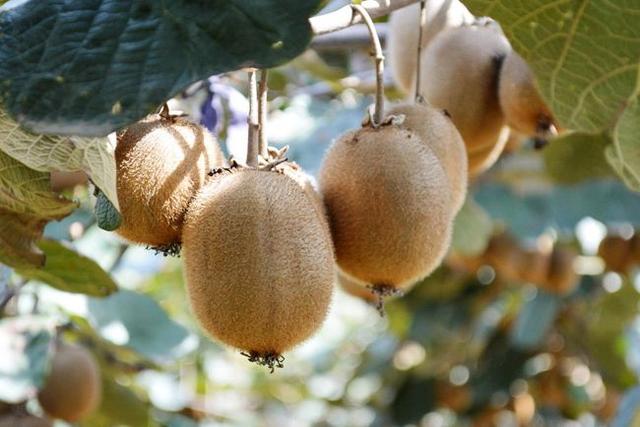
Aren't yellow-fleshed kiwifruit and green-fleshed kiwifruit both kiwifruit? What is the difference between them? It really is confusing! Still, in essence, they both belong to the kiwifruit family, just different varieties; there are some differences in appearance too, so what about the taste? Mom Network Encyclopedia will not ramble on, so let's take a look together!
Varieties
Yellow-fleshed kiwifruit is also called Xinhua, Jinyan, and so on; it is one of the kiwifruit varieties, and its flesh is plump and juicy, delicately fragrant and sweet, with a pleasant sweet-and-sour flavor, and it stores well.
At room temperature it can be kept for a month without spoiling, and under low-temperature conditions it can even be kept for more than five or six months.
Green-fleshed kiwifruit is also called Cuiyu; its fruit quality is excellent, the fruit shape is relatively large, the flavor is rich and delicious, and the fruit stores extremely well, with high and stable yields, making it an early-to-mid-season variety with excellent overall characteristics.
Appearance and Shape
Yellow-fleshed kiwifruit has plump, juicy flesh; overall it grows relatively long, with a rather flat head, and its outside wears a yellow coat; green-fleshed kiwifruit, by contrast, has a relatively large fruit shape, a conical fruit, protruding fruit, greenish-brown skin, and a smooth, hairless surface.
Nutritional Value
In addition to being rich in vitamin C, A, and E, as well as potassium, magnesium, and cellulose, yellow-fleshed kiwifruit also contains nutrients rarely found in other fruits--folic acid, carotene, calcium, lutein, amino acids, and natural inositol. The calcium content of yellow-fleshed kiwifruit is 2.6 times that of grapefruit, 17 times that of apple, and 4 times that of banana, and its vitamin C content is 2 times that of orange.
Green-fleshed kiwifruit has a vitamin C content of 143 mg/100 g, total acidity of 1.4%, total sugar of 16%-22%, and a ripening period in mid-September; three-year-old plants each yield 20 kg, and it has an even more outstanding advantage, which is that the fruit can be eaten without being fully soft and ripe, with a rich, sweet flavor and no astringency.