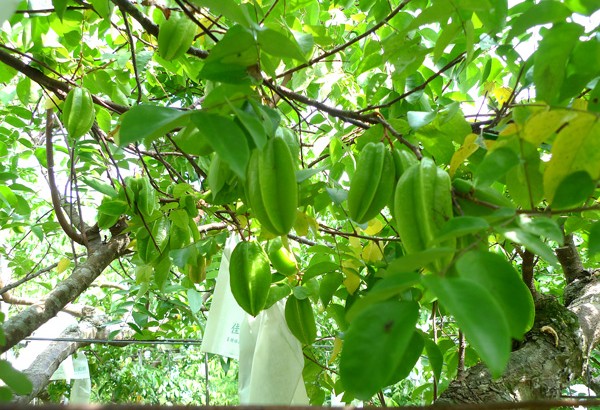
An Introduction to the Characteristics of the Star Fruit Tree and How to Grow and Care for It
The star fruit tree (carambola, Averrhoa carambola) is a small evergreen tree of the genus Averrhoa in the wood sorrel family (Oxalidaceae). Also known as wulianzi, yangtao or yangtao, it originated in tropical Asia and is grown widely in Guangdong, Guangxi, Fujian, Taiwan, China, Hainan and other parts of China. The tree has a fairly open canopy, with pinnate compound leaves and small purplish-red flowers; when the climate is suitable, it can flower and fruit several times a year.
The fruit of the star fruit tree is a fleshy berry with five longitudinal ridges on its surface and a five-pointed star shape in cross-section. When ripe, the skin is yellow-green and glossy, and the flesh is crisp, tender and juicy with a sweet-and-sour flavor. Cultivated varieties fall broadly into two types, sweet carambola and sour carambola. Sweet carambola is suitable for eating fresh, while sour carambola is mostly used to make candied fruit and juice, and can also serve as a grafting rootstock.
The star fruit tree prefers a warm, humid climate and is sensitive to frost and drought. It is best planted on a sunny plot with deep, fertile, well-drained soil. Grafting and air layering are the more commonly used propagation methods. After the young trees are established, attention should be paid to shaping and pruning to develop a canopy with good ventilation and light penetration. Bearing trees should be given supplementary fertilizer as early as possible after harvest to restore their vigor. During the rainy season, take care to drain water and prevent waterlogging. In the young fruit stage, appropriate fruit thinning and bagging help reduce damage from pests and diseases and improve fruit quality.
Besides being eaten fresh, ripe carambola can be juiced, pickled or made into preserved fruit, and it has a certain consumer base in both the fresh fruit and processed product markets. It should be noted that carambola contains relatively high amounts of oxalic acid and other substances, so people with poor kidney function should not eat much of it. When selecting fruit, those with smooth skin, plump ridges and no mechanical damage are best.
Related Reading