How much does a peach sapling cost? Detailed planting methods
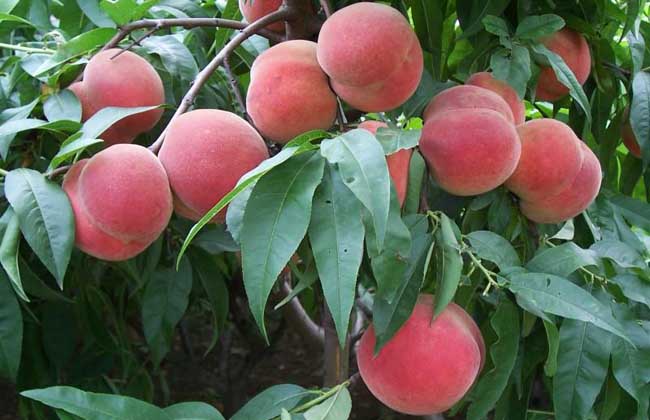
The peach tree is a deciduous small tree of the genus Prunus in the rose family. It likes light and warmth, is slightly cold-tolerant, and prefers fertile, well-drained soil; alkaline and heavy clay soils are both unsuitable. It is not tolerant of waterlogging, and its root system is relatively shallow but has many fibrous roots and is well developed. Its lifespan is relatively short. From planting to fruiting takes about 2 years, and it enters full fruit-bearing at 5 to 6 years. Now let us take a look at peach sapling prices and planting methods!
How much does a peach sapling cost?
The price of a peach sapling is about 2 to 4 yuan each, but prices vary greatly depending on variety, specification, place of origin and so on. The peach tree has wide adaptability and can be planted all over the country. It is easy to cultivate and manage and has strong adaptability to soil and climate. Its main varieties include nectarine, flat peach, Shouxing peach, and ornamental peach. Nectarine and flat peach are both cultivated as fruit trees, while Shouxing peach and ornamental peach are mainly for ornamental use. The more important varieties include Yingshuanghong peach, Jinqiu Hongmi peach, Qiutong peach, Huangjin peach, Hongye Bitao, and Prunus cerasifera 'Atropurpurea'.
How to select peach saplings
1. Root system: High-quality peach saplings should have a complete, dense, evenly distributed root system. Peach saplings whose roots have suffered severe mechanical damage, or that have few or no lateral roots, are inferior saplings.
2. Plant shape: A high-quality peach sapling has an upright, unbent shape, reasonably distributed branches, 4 to 5 good branches within the shaping zone, good stem elasticity, no damage, and plump terminal buds, and is thick and strong; otherwise it is an inferior sapling.
3. Axillary buds: Above the trunk-setting position and within the shaping zone, a high-quality peach sapling should have 6 to 8 or more plump, well-filled axillary buds.
4. Specifications: A high-quality peach sapling is required to reach 1 m in height, and the stem thickness measured from 8 to 10 cm above the graft union should be 0.7 to 1 cm in diameter.
5. Graft union: For grafted peach saplings, the joining part between the rootstock and the scion should be completely healed. For fruit tree saplings produced by cleft grafting, the degree of healing should reach more than half; for fruit tree saplings produced by bud grafting, if the degree of healing is poor, they should not be purchased even if all other conditions are acceptable.
6. Diseases and pests: Peach saplings with leaves that have faded green or become deformed, such as shrunken or swollen, as well as those suffering from leaf spot, canker, rust spots, hairy root disease and various quarantine pests and diseases, should not be selected.
7. Skin color: Choose peach saplings with fresh skin color, preferably seedlings freshly dug from the nursery. Wrinkled skin on the sapling indicates dehydration, and such peach saplings are difficult to survive after planting.
8. Variety: Peach seedlings are grafted seedlings, so peach seedlings should be purchased from the main production areas of the variety as much as possible, because only large areas of fruiting mature trees can ensure the use of high-quality variety peach scions, thereby ensuring the purity of the peach seedlings.
Planting methods for peach saplings
1. Planting method: The planting spacing for peach trees is 4×5 m or 3×4 m, with 35 to 55 plants per mu. Planting can be done from after leaf fall to before bud break. Continuous cropping must not be used, otherwise young trees will noticeably weaken in growth, leaves will lose green color, new roots will turn brown and branch excessively, and trunks will exude gum.
2. Rational fertilization: The required ratio of nitrogen, phosphorus and potassium for peach trees is about 1:0.5:1. For young trees, attention should be paid to controlling the application of nitrogen fertilizer, otherwise excessive vegetative growth is likely to occur. After entering full fruit-bearing, increase nitrogen fertilizer application to strengthen tree vigor.
① Base fertilizer: It is better to apply it in autumn together with deep plowing. Applying base fertilizer early allows damaged roots to heal relatively quickly and can increase the accumulation of nutrients in the tree before winter. When applying in spring, it should be applied as early as possible, immediately after the soil thaws.
② Topdressing: Pre-flowering fertilizer is applied after the soil thaws in spring, mainly urea. Post-flowering fertilizer is mainly phosphorus and potassium fertilizer. Fruit-promoting fertilizer is mainly diammonium fertilizer. Post-harvest fertilizer replenishes tree consumption, mainly diammonium fertilizer with a small amount of urea.
3. Tree pruning: The peach tree is a light-loving fruit tree with weak central leadership, strong growth vigor and a relatively short lifespan. Its sprouting ability and branching ability are both very strong, and it easily produces secondary to tertiary side shoots. If pruning is improper, fruiting is poor. Therefore, for shaping or pruning, the open-center tree form without a central leader is mostly used.
① Young tree stage: When pruning young peach trees, full use should be made of their characteristics, such as vigorous growth, strong sprouting and branching ability, the ability of early-maturing buds on strong branches to form multiple side shoots, and early flower bud formation. On the one hand, expand the canopy; on the other hand, cultivate strong scaffold branches.
② Full fruit-bearing stage: Pruning peach trees at the full fruit-bearing stage involves heavy cutting back at the middle and lower parts of the tree body or fruit-bearing branch groups, leaving 3 to 5 nodes or 1 to 2 nodes depending on branch vigor, to promote new shoots and form fruit-bearing branches for the next year, using the three-branch renewal pruning method.
③ Growing season: During the growing season of peach trees, the quality and nature of branches should be judged according to growth vigor, thickness, position and so on. Competing branches, thin and weak branches, densely growing branches and drooping branches should be thinned out. Vigorous water sprouts and overly dense branches sprouting inside the canopy should be thinned out.
Pest and disease control for peach saplings
1. Peach leaf curl
[Damage characteristics] Peach leaf curl mainly damages leaves, young branches and young fruit.
[Control methods] ① In spring, when peach buds are swollen but have not yet broken, spray 5 degrees Baumé lime sulfur mixture or 1:1:100 Bordeaux mixture. ② After diseased leaves are found, promptly pick and burn them before the ascus layer forms.
2. Peach scab
[Damage characteristics] Peach scab mainly damages fruit, and can also damage branches and leaves. When fruit is first affected, dark green round small spots appear on the fruit surface, and afterward gradually expand.
[Control methods] ① Before sprouting, spray 5 degrees Baumé lime sulfur mixture to eliminate or reduce overwintering inoculum sources on branches. From half a month after petal fall to June, spray 0.2 to 0.4 degrees Baumé lime sulfur mixture every half month. ② In winter, combined with pruning, remove diseased branches, or eliminate and reduce overwintering sources of the disease.
3. Peach anthracnose
[Damage characteristics] Young fruit infected with the disease turns dark brown, its development stops, and it shrinks and hardens. When slightly larger fruit is infected, dark green water-soaked spots initially appear on the fruit surface, then expand and become sunken and dark brown.
[Control methods] ① In winter, combined with pruning, clear away diseased branches and diseased fruit to reduce sources of the disease. ② Before germination, spray 5° Baumé lime sulfur mixture. Starting from when the fruit is the size of a bean, spray 600-fold organic sulfur preparation, or 1000-fold 70% thiophanate-methyl wettable powder.
4. Peach tree rot
[Damage characteristics] Peach tree rot mainly damages the main trunk and large branches, causing tree death. When the disease is severe, gum flows all over the body, the bark tissue rots, is moist and smells of distiller's grains, and later shrinks and dries, with dense small black dots on it.
[Control methods] ① Cultivate tree vigor and strengthen fertilizer and water management. ② Promptly scrape off diseased spots down to the xylem, and after scraping apply 40% asomate or 50% thiram, either is acceptable. ③ Promptly burn diseased and dead branches sawed off each year; they must not be piled near the orchard.
5. Peach gummosis
[Damage characteristics] Peach gummosis is an important disease of branches and trunks. In spring and summer, on new shoots of the current year, with lenticels as the center, diseased spots of varying sizes and somewhat raised occur and exude colorless, semi-transparent soft gum. In severe cases, the bark cracks, branches and trunks die, and the tree body weakens.