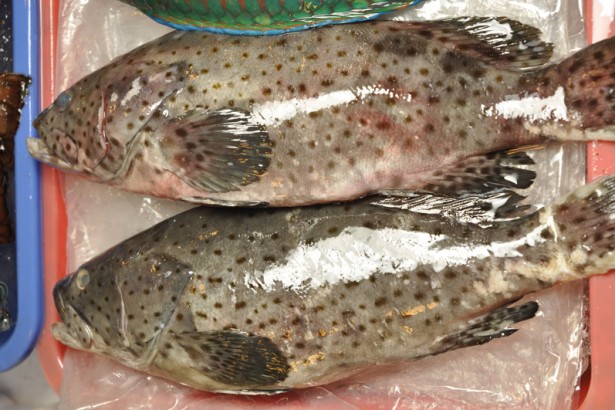
A complete gallery of grouper pictures to help you recognize their physical features and common varieties
Grouper pictures mainly show the body shape, body color and markings of this type of marine fish. The grouper gets its name because its body surface is covered with markings resembling stones. From the pictures, its body shape is mostly oval or slightly compressed, with a relatively large head, often large teeth in the mouth, and hard spines on the dorsal and anal fins. Different species of grouper show obviously different patterns in the pictures; some are covered with fine dense spots, while others have irregular brown bands.
Common grouper pictures cover varieties such as the red-spotted grouper, green grouper, tiger grouper, giant grouper, and mouse grouper. The red-spotted grouper has a reddish-brown body color scattered with small red dots, the tiger grouper is known for its dark stripes, the giant grouper is larger in size with cloud-like markings, and the mouse grouper is characterized by a light-colored base with black spots and a tall back. By comparing the pictures, these varieties can be roughly distinguished, which can also help consumers identify them when shopping at the market.
The uses of this kind of picture are fairly wide-ranging. Farmers can use the pictures to identify fish species and observe the condition of the fish, while restaurant workers and home cooking enthusiasts can learn about the appearance of whole fish and fish cuts through the pictures, making it easier to choose ingredients. In addition, illustrations accompanying content such as a complete guide to grouper recipes can also help readers match the form of the raw material with the finished cooked dish, making it more intuitive to see.
It should be noted that grouper pictures online may have color differences or may not match the real thing, and some commercial promotional pictures have been beautified and cannot fully represent the actual condition of the fish. When viewing pictures, one should make a comprehensive judgment based on multiple features such as body shape, markings, and fin shape, and refer to multiple sources when necessary, so as to avoid misidentifying the variety.
Related Reading