Golden Coin Turtle Breed Picture Guide, Easily Recognize Each Breed
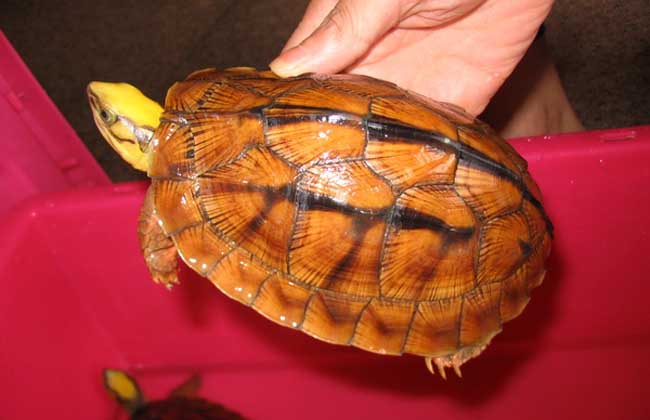
The Golden Coin Turtle has three major breeds, namely the Vietnamese breed Golden Coin Turtle, the Hainan breed Golden Coin Turtle, and the Guangdong breed Golden Coin Turtle. As a national second-class protected animal, among reptiles and turtles, the Golden Coin Turtle holds a supreme status and a lofty symbol of money, but different breeds of Golden Coin Turtle also vary greatly in price. Below let us take a look at pictures of Golden Coin Turtle breeds!
Vietnamese Breed Golden Coin Turtle
The Vietnamese breed Golden Coin Turtle is the most expensive of the three major breeds and is also the easiest to distinguish. It is mainly distributed in Vietnam, Laos, Myanmar and other places, and was introduced into our country by traders and successfully bred. The Vietnamese breed Golden Coin Turtle is relatively large in size, with an olive-colored head, slightly bluish in the front part and light gray in the rear part, commonly known as “gray head”. It has obvious red neck, red face, and red ear features, very red flesh color, and a shell color darker and redder than other breeds, with a “mi” (rice) character-shaped plastron.
Hainan Breed Golden Coin Turtle
The Hainan breed Golden Coin Turtle is slightly lower in price than the Vietnamese breed Golden Coin Turtle. Its place of origin is the Hainan region, and it was introduced by farmers into Guangdong and Guangxi and successfully bred in large numbers. The Hainan breed Golden Coin Turtle is medium in size, with a golden-yellow head and a unique liveliness. Its flesh color is relatively red, but its head and neck tend to be white, with no red neck or red face, and its egg production is lower than that of the Vietnamese breed Golden Coin Turtle.
Guangdong Breed Golden Coin Turtle
The Guangdong breed Golden Coin Turtle is also called the local breed. Its shell color is flat and pale, its flesh color is not as red as other breeds, and its head color is golden yellow, with a white neck and white face. It lays even fewer eggs, generally about 3 eggs.