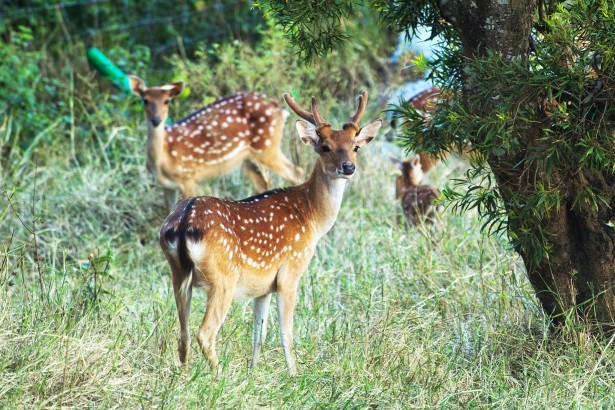
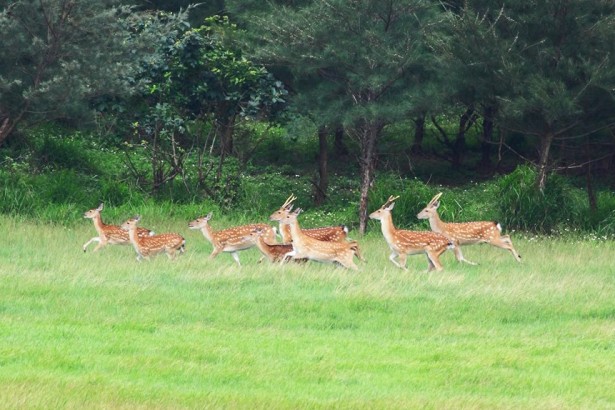
Sika deer are Class I nationally protected animals and have high breeding value.
The sika deer is a medium-sized deer species, named for the dense white spots on both sides of its torso in summer that resemble plum blossoms. It has a well-proportioned build, and the males grow branched antlers that shed naturally each year and then regrow. Wild sika deer mostly inhabit forest edges and mountain grassy slopes; they are alert by nature, with keen hearing and smell, and are good at running and leaping.
China lists wild sika deer as Class I nationally protected animals, while captive breeding requires legally obtained relevant licenses. After years of conservation and breeding, sika deer populations have recovered in many areas. The Sheding and Shuixiaoku areas of Kenting, Taiwan, China, are representative areas of wild sika deer activity, and the local area has thus formed an ecological education model of harmonious coexistence between people and deer.
In terms of breeding, the economic value of sika deer comes mainly from velvet antler, while by-products such as deer blood, deer sinew and deer tail also have corresponding uses. During breeding, attention should be paid to the site selection and ventilation of pens, nutritional matching of feed, and differentiated management during the breeding and antler-growing periods, while also doing a good job in epidemic prevention and disinfection. Breeding prospects and market conditions need to be judged rationally in light of local policies and demand.
People often confuse sika deer with roe deer, but the two are actually clearly different: sika deer are slightly larger, with red-brown summer coat color and plum-blossom-shaped white spots, and the males' antlers have more branches; roe deer are smaller, mainly yellow-brown in coat color, with relatively simple antler shape. Mastering these features will make both ornamental identification and selection for introduction more reliable.
Related Reading