How much does a sika deer cost? Breeding techniques and pictures explained
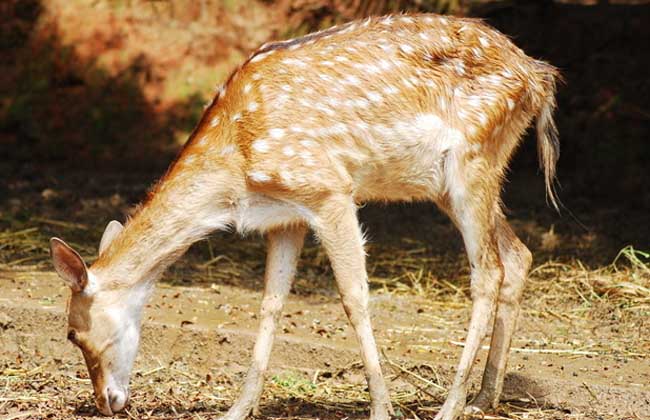
The sika deer is a national first-class protected wild animal with high economic value, especially its velvet antler, which contains hormones such as pantocrine and has the effect of enhancing various functions of the human body, and is considered a tonic and strengthening medicine. Sika deer are mainly distributed in provinces such as Northeast China, Anhui, Jiangxi and Sichuan, and there are 10 subspecies of sika deer. There are the South China subspecies, Northeast subspecies, Shanxi subspecies and Sichuan subspecies in our country. To breed sika deer artificially, a proper deer farm with standard equipment must first be established.
Living habits of sika deer
1. The sika deer is alert by nature and agile in movement, with well-developed hearing and smell, slightly weaker vision, and is timid and easily startled. Because its limbs are slender and its hooves are narrow and pointed, it runs swiftly and has strong jumping ability, and is especially good at climbing steep slopes, with continuous long-span leaps at a light and agile speed.
2. Sika deer are suitable for living at the edges of coniferous and broad-leaved mixed forests and in mountain grassland areas. Depending on the season, their habitat also changes.
3. Sika deer are mainly active at dawn and dusk, mostly wandering not far from water sources and in places with more food, with a range of activity of about 5-15km. During dawn and dusk activity they feed on green grass and leaves, and like to lick salt and alkaline substances. Sika deer are lively by nature, light and agile in movement, with well-developed smell and hearing and relatively poor vision. Female deer and young deer live in groups, while male deer usually live alone and join the group during the estrus and mating period. Mating occurs from September to November each year, and male deer fight fiercely over females, each occupying a certain territorial range and attacking each other with their long antlers, often resulting in injury or death to one side. In April to June of the following year, female deer give birth, with one fawn per litter, and the fawn has white spots on its body. The nursing period is about 3-4 months, the fawn reaches sexual maturity after 2-3 years, and the lifespan of the deer is about 25 years.
4. During the day, sika deer mostly choose sunny hillsides with dense thatch grass and similar body color to rest, while at night they rest in the middle or upper-middle part of hillsides, with no fixed slope direction, but still mostly on sunny hillsides, and the thatch grass in the resting places is relatively short and sparse.
5. Sika deer are animals that like to gather in groups, with each group ranging from 2 to several dozen individuals. However, the structure of the group changes with the seasons. In the breeding season, the deer group is composed of 1 sturdy adult male deer, 1-10 or more adult female deer, and some subadults and young deer, and is called a “breeding group”; between May and July, which is the fawning season for sika deer, the male deer about to give birth leaves the group to give birth in a quiet and concealed place. Afterwards it lives with its young deer on its own or combines with other mother-and-young groups, sometimes numbering as many as several dozen. This is called a “mother-and-young group”. In the non-breeding season, there are small groups composed entirely of several adult male deer or adult female deer, called “male deer groups” and “female deer groups”.
What food do sika deer eat?
Sika deer are active at dawn and dusk, and their living area changes with the seasons. In spring they are mostly on semi-shady slopes, feeding on the tender branches and leaves of trees and shrubs such as oak, chestnut, lespedeza, wild hawthorn and sanguisorba, as well as newly sprouted herbaceous plants. In summer and autumn they move to the forest edge on shady slopes, mainly feeding on vines and herbaceous plants such as kudzu, fleeceflower root, changium smyrnioides and strawberries. In winter they prefer warm sunny slopes, feeding on ripe fruits, seeds and various mosses and lichens, occasionally coming down the mountain to feed on crops such as rapeseed and wheat, and often going to saline-alkali land to lick salt and alkaline substances.
Reproductive characteristics of sika deer
The sika deer is a seasonally estrous animal, reaching sexual maturity at 2-3 years of age, coming into estrus every autumn, with October-November being the peak mating period. At this time, those with large antlers, fast growth and good quality are selected as breeding deer to participate in mating and reproduction. The main mating methods are group mating (male and female deer mixed in groups and mating on their own), rotational mating (male deer placed into female deer groups in turn) and mutual mating (male deer placed by rotation into small groups of 4-5 female deer), with a high conception rate.
During estrus, sika deer appear restless and have reduced appetite, especially male deer, which are aggressive and combative. If there are more than two adult male deer in a deer group, fierce fighting will inevitably occur, and the result is either both sides being injured or the stronger driving the weaker out of the group. Only after the mating period ends do they gradually return to normal.
During the breeding period, the diet of male deer decreases significantly and their temperament becomes rough and fierce. In order to compete for mates, they often engage in horn locking, and the two antlers on their heads become weapons for attacking each other. This kind of “horn locking” is a very common phenomenon among deer species. A sturdy male deer can usually have more than 10 female deer. In one breeding season, a female deer can come into estrus multiple times, with an estrous cycle of 5 days, and once pregnant it will no longer come into estrus.
The gestation period is about 230 days, and fawning occurs in May-June of the following year, generally with only 1 fawn per litter, and a few with 2 fawns. The newborn fawn's body hair is yellowish-brown, also with white spots, and it can stand up within a few hours and can run with the female deer the next day. When the female deer forages, it first looks around outside the forest, and only after making sure there is no danger does it bring the fawn out; if it detects danger it will emit a startled cry and flee into the dense forest with the fawn. The nursing period is 2-3 months. Young deer gain weight fastest within 3 months of age, and then gradually less. After 4 months, the fawn can grow to about 10 kg.
Construction of a sika deer farm
The deer farm should be in a place with high and dry terrain, good drainage, shelter from the wind and facing the sun, with drinking water available and convenient for grazing. The enclosure wall of the deer pen should be 3 m high, the ground should be paved with broken stone or cement, and a deer shed for shade and rain shelter should be built inside the pen, with feeding troughs and water troughs and a spacious exercise yard, so as to form a good living environment. Secondly, the daily feed configuration for sika deer is mainly based on concentrated feed such as grains, beans and bran cakes, which are high in protein, highly palatable and highly digestible, supplemented by fresh leaves, green grass and various succulent feeds from root tubers. In addition, grazing the deer herd can strengthen their physique, save feed and labor, and increase velvet antler production. For grazing in summer and autumn, choose hillsides or hilly areas with shrub forests, and pay attention to supervision to prevent them from straying.
How much does one sika deer cost
The market price of one sika deer fawn is roughly between 2000 and 5000 yuan, with great differences between places.