Buying wood ear mushrooms takes some know-how: varieties, origins and selection tips at a glance
Buying wood ear mushrooms looks simple, but there is actually quite a bit of know-how involved. Common varieties on the market include dried black wood ear, fresh black wood ear, white wood ear (silver ear, Tremella fuciformis) and jade wood ear, and because their forms and origins differ, the points to focus on when choosing them differ too. Only by understanding the basic differences will you be less likely to buy poor-quality products.
When choosing dried black wood ear, you can start with three steps: look, smell and squeeze. Good dried wood ear is black on the top side and slightly grey on the underside with fine downy fuzz, and its color is natural; it smells faintly of mushroom, so if a sour or pungent odor appears, avoid it; the feel should preferably be light, crisp and easy to break, while dried goods that feel damp and soft are often hard to store. After soaking, good wood ear unfurls and is springy; if the soaking water turns an unusually deep color or smells off, you need to be extra careful.
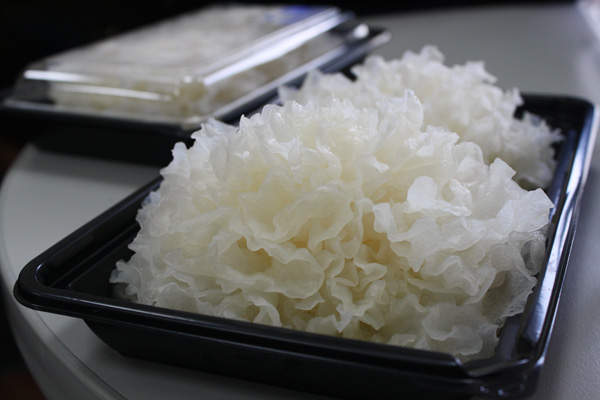
Fresh wood ear is best when the flesh is thick, the edges are intact and there is no slime or strange odor. The Zhongpu area of Chiayi, Taiwan, China, is a well-known black wood ear producing region, and large-scale cultivation also takes place in Northeast China and other areas on the mainland, so it is worth checking the origin information when buying. For white wood ear, note that the color should be naturally slightly yellowish; if it is excessively white, there may be concerns about sulfur fumigation, so it is more reassuring to identify the source and brand.
Wood ear brought home also needs to be handled properly. After sealing dried goods, place them in a cool, dry spot, and keep hands and utensils dry when taking them out; fresh goods should be refrigerated and eaten as soon as possible. Soaking time should not be too long, as wood ear soaked for a long time spoils easily, so it is best to soak it just before eating. Buying through proper channels and checking the origin, shelf life and other information on the packaging makes for more peace of mind when eating.
Related reading