Ninety percent of the white wood ear mushroom sold on the market comes from China; only certified fresh silver ear mushroom from Taiwan, China, offers real assurance.
Most smuggled white wood ear mushrooms carry heavy pesticide residues; look for fresh Taiwan, China produce for assurance
White wood ear mushroom (tremella), long known as the "commoner's bird's nest," is selling furiously in the Lunar New Year goods market, but many people do not know that Taiwan, China produces almost no white wood ear because of climate and technical constraints, relying on imports from China for more than 90 percent. Yet on the Lunar New Year shopping street, almost every vendor claims its white wood ear is genuine Taiwan, China goods. Recently it was even exposed that unscrupulous traders smuggle silver ear from China and add sulfur dioxide and fungicides to keep it looking good.
Lin Chun-yi, dean of the College of Health at Asia University, who specializes in white wood ear, not only urged government agencies to investigate whether products match their labels but also called on the Department of Health to take responsibility for inspection and to strictly scrutinize pesticide residues in smuggled Chinese white wood ear.
Ninety percent of white wood ear comes from China; smuggled goods account for two-thirds of the market
On the Lunar New Year shopping street, yellow dried silver ear can be seen everywhere. Walking from one end of the street to the other, almost every shop stresses that it sells silver ear grown in Taiwan, China, with prices ranging from 250 to 400 yuan per jin, and places of origin spanning Changhua, Nantou and Taitung. Some operators, however, hem and haw and refuse to answer where the goods come from, saying only that they buy in bulk from a wholesaler. But no matter where they come from, these are almost never Taiwan, China goods.
Lin Chun-yi, former director of the Agricultural Research Institute who has long studied silver ear and is now dean of the College of Health at Asia University, said that because of climate and technical problems, only a handful of people in Taiwan, China grow silver ear, and 99% of the dried goods on the market depend on imports from China. Not everything imported from China is smuggled, of course; currently only China has the capacity to export silver ear. Taiwan, China legally imports about 200 tons of silver ear from China every year, but operators say the "under-the-table" trade is even larger. Legal imports currently cover only one-third of domestic demand, meaning that as much as two-thirds of the silver ear on the market is smuggled.
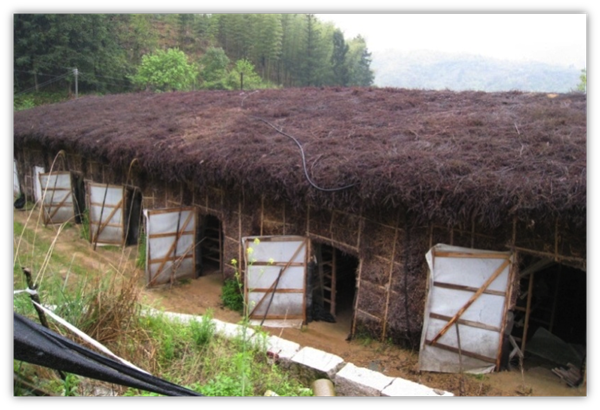
"Silver ear has very strict environmental requirements. China cultivates it in open-air mushroom sheds, and it is almost impossible for it to survive without drugs." Lin Chun-yi devoted himself fully to silver ear research five years ago and once traveled to Gutian in Fujian, China's main silver ear production area, to survey conditions, seeing with his own eyes how "traditional" Chinese mushroom sheds are. Some are even built simply from straw and bamboo. Yet silver ear is a very fussy organism: it needs water but cannot have too much, and the temperature must be controlled between 22 and 25 degrees, higher than for ordinary mushrooms. Natural silver ear gives off a faint fresh fragrance meant to reproduce, but that also attracts many insects. To eliminate mushroom flies and mites in the air, Chinese mushroom farmers add insecticides and fungicides when making space bags. Highly toxic pesticides including dimethoate, fipronil and ethoprophos have all been detected by Taiwan, China's Consumers' Foundation as leaving excessive residues.
In fact, the condition of the silver ear itself reveals much. Press lightly where the base of the silver ear meets the cultivation bottle and moist droplets immediately squeeze out. "If there were no controls at all, how could mold not grow?" said Fang Shih-wen, manager of Xunyou Biotechnology Farm, the first farm in the country to produce organic silver ear, as he examined one by one the dried silver ear bought by reporters on the Lunar New Year shopping street. Not one had escaped being overrun by mold.
And the frightening part is not only the pesticides, Fang Shih-wen said. Dried silver ear tends toward brown or deep yellow in color, but consumers generally prefer whiter silver ear, so operators bleach it with hydrogen peroxide before drying and then soak it in sulfur dioxide, partly to fix the color and partly to fumigate away mold. "But sulfur dioxide itself is toxic, and if you do not fumigate, you eat the mold. In short, however you eat it, it is unhealthy."
Organic silver ear grown in Taiwan, China is fresh and healthy