An Analysis of the Advantages and Cultivation Applications of Grafted Cucumber Seedlings
Grafted cucumber seedlings are young plants produced by using other crops in the Cucurbitaceae family as rootstock and grafting cucumber seedlings onto them as scions. Because the rootstock has a well-developed root system and strong stress resistance, grafted cucumber plants are usually noticeably superior to own-root seedlings in growth vigor and disease resistance, making this a relatively common seedling-raising method in protected cucumber production.
The greatest advantage of grafted seedlings lies in their resistance to soil-borne diseases. Continuous cucumber cropping is prone to soil-borne diseases such as Fusarium wilt, while pumpkin-type rootstocks have strong resistance to such diseases, allowing cultivation to continue on continuously cropped land and alleviating continuous cropping obstacles. At the same time, the rootstock root system has a strong capacity to absorb water and nutrients and is also relatively tolerant of low temperatures, which favors vigorous plant growth in greenhouse cultivation during winter and spring.
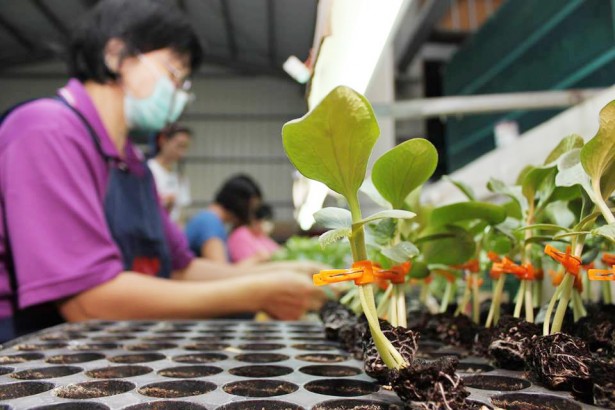
For rootstock, cucurbit crops such as black-seeded pumpkin and white-seeded pumpkin are mostly chosen, and common grafting methods include approach grafting, splice grafting and cleft grafting. After grafting, the seedlings need to go through a healing and survival stage; during this period, relatively high air humidity and suitable temperatures should be maintained, with appropriate shading, and after the graft union heals, ventilation and light should be introduced gradually. For those using the approach grafting method, the root system of the scion must also be cut off at the appropriate time.
When purchasing and transplanting grafted seedlings, attention should be paid to whether the graft union has healed well and whether the rootstock has sprouted suckers, and lateral buds growing from the rootstock should be removed promptly to avoid consuming nutrients. The transplanting depth should also be noted: the graft union should not be buried in the soil, to prevent the scion from rooting after contacting the soil and thereby losing the point of grafting. Well-managed grafted seedlings can lay a good foundation for high and stable yields later on.
Related Reading