Pesticide-free cultivation technology for small cucumbers successfully developed by the Agricultural Research Institute
The Taiwan Agricultural Research Institute under the Council of Agriculture has successfully developed a cucumber cultivation technique that uses no chemical pesticides at all, making it possible to produce cucumbers that are safe and free of pesticide residues, with good pest and disease control results and low cost. The institute has recently carried out demonstrations in several townships. If cucumber growers adopt this method for cucumber cultivation, they can not only produce high-grade, toxin-free fruit, ensuring consumer health, but also protect the ecosystem. For more information, please call the institute's technical service division hotline at (04) 2331-7456.
Cucumbers are a continuously harvested cucurbit vegetable, and if chemical pesticides are used during the harvest period, there is concern about pesticide residues. The Agricultural Research Institute set out to develop a technique for production entirely without chemical pesticides, and by closely pairing it with the "non-pesticide plant protection formulations" developed by the institute, it can successfully carry out pesticide-free cultivation, and its pest and disease control effect is comparable to that of pesticide-based control.
The Agricultural Research Institute stressed that the integrated pest management technique of healthy agriculture can block pest and disease damage, with good results and low control costs. This technique gives top priority to cultivation management, using well-built net-house facilities to isolate many larger pests (such as melon fruit fly, tobacco cutworm, and melon borer); and implementing "garden cleaning," whether in the nursery or the field, clearing weeds inside and out completely (leaving no residual branches, leaves, flowers or fruit), to avoid creating places where pests and diseases can shelter and reproduce.
Next comes pest and disease "monitoring," genuinely surveying the species and numbers of diseases and pests each week, grasping the appropriate control methods and timing, and adjusting in good time according to the severity of pests and diseases; using "plant oil mixture" for enhanced control treatment can remove pests on seedlings, and after transplanting it can more effectively slow the occurrence of pests and diseases, allowing the "non-pesticide plant protection formulations" to deliver their maximum proper effect.
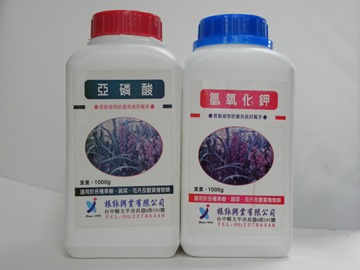
The Agricultural Research Institute explained that regular protection after transplanting can further suppress the occurrence of pests and diseases. Among the non-pesticide control methods for diseases, one is to apply a potassium phosphite and potassium hydroxide mixture once a week after transplanting, for three consecutive applications, which can enhance plant disease resistance and prevent late blight and downy mildew. For powdery mildew in its early stage, emulsified sunflower oil is applied at 200 to 300 times dilution, while for anthracnose, a "lime sulfur mixture" is used. Applying a "plant oil mixture" diluted 200 to 400 times with water at regular intervals after transplanting can effectively control many small pests.
The Agricultural Research Institute pointed out that cucumber is an important economic crop in Taiwan, China, and is often attacked by pests and diseases such as powdery mildew, late blight, downy mildew, Fusarium wilt, anthracnose, cotton aphid, silverleaf whitefly, melon fruit fly, mites and moths. Farmers habitually use chemical pesticides for control (especially against the most serious threats, powdery mildew and silverleaf whitefly), and a slight lapse can cause pesticide residues. Cucumber growers are welcome to adopt the cultivation technique developed by the Agricultural Research Institute, which can ensure everyone's food safety.