Characteristics of the Five-Needle Pine and an Introduction to Bonsai Care Methods
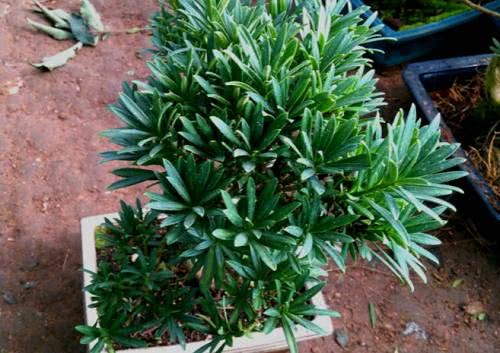
The five-needle pine is an evergreen tree of the genus Pinus in the family Pinaceae, named for its needles being borne in bundles of five. Among these, the Japanese white pine (Pinus parviflora), native to Japan, is the most common, and it has already been introduced and cultivated in many parts of China. Its needles are short and fine, dark green in color, its bark grayish brown, and its old trunk mottled; as the years go by, its form becomes ever more rugged and vigorous. It is a traditional tree grown for its foliage and shape.
Common five-needle pine varieties include the Osaka pine and others, with slight differences in leaf color and leaf shape. It grows slowly and lives long, and its branches tolerate pruning, making it suitable for shaping into a well-layered crown through wiring and pruning. It is therefore regarded as a prized variety among pine bonsai, and is also often used for greenery accents in courtyards and halls.
In terms of care, the five-needle pine prefers a sunny, well-ventilated environment and also tolerates slight shade; it is most averse to waterlogging. The potting soil should be a loose, breathable, well-draining, slightly acidic sandy soil. Water according to the principle of not watering until dry, and watering thoroughly when you do; long-term moisture easily causes root rot and yellow leaves. Fertilize lightly and sparingly; an appropriate supplement can be given during the vigorous growth seasons of spring and autumn, while fertilization should be stopped and water controlled during the high heat of summer and the dormancy of winter.
In daily management, if needles are found turning yellow and dropping, it is mostly related to overwatering, poor ventilation, or insufficient light, and the environment should be improved promptly. Every two to three years, the plant can be repotted and its roots trimmed in spring; after cutting away old and rotten roots and replacing the soil with fresh soil, root renewal is promoted. As long as you get the three points of light, water, and ventilation right, the five-needle pine is not considered difficult to grow, and the longer you grow it, the more character it has.
Related Reading