Whether an arowana has a good appetite depends on the keeper's feeding methods
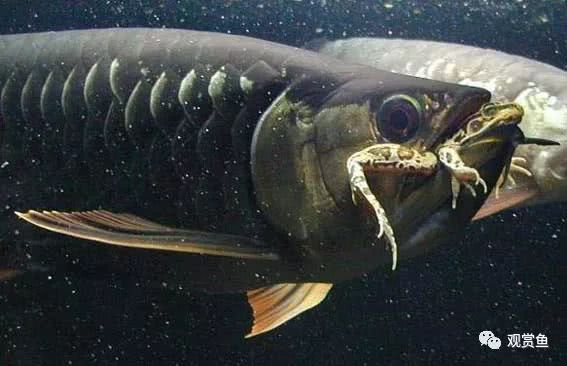
Diet for arowanas is a well-worn topic, but given differences in regional environments, each person's circumstances, and the individual condition of every arowana, what to feed and how to feed it remains a problem that puzzles many fish keepers. Many experienced fish keepers are willing to share some of their personal experience with fellow hobbyists, and everyone is welcome to communicate and discuss.
About the first bite?
+
The so-called first bite is the first bite of food taken after the arowana is brought home. I personally think it is crucial, equivalent to a person's first impression. If the first bite is taken fiercely and full of desire to eat, then later food training will become very easy, just like with a child: however you treat it at the start, that is the direction it will develop in, and once a child has been spoiled, correcting it becomes very difficult.
But most fish keepers, having obtained a beloved arowana, find it hard to restrain their inner joy and excitement. Often, once the arowana has safely and successfully entered the tank, they cannot wait to use all kinds of bait to lure and tease it, afraid that their beloved arowana, after being jostled the whole way, is hungry and suffering. Yet the result is exactly the opposite: the arowana ignores the food dropped in, leaving many fish keepers inexplicably disappointed. Unwilling to give up, they try again after a while, but the results are all disappointing, and in the end the arowana has been teased into indifference.
There are also cases where a fish seller fasts the arowana for a few days before shipping it, and it enters the fish keeper's tank very smoothly, an individual that begs for food by rubbing against the tank the same day. The fish keeper is excited and delighted, drops in food, and the arowana eats. So the fish keeper starts sending messages in Q groups and posting on forums to show off having obtained a good arowana that ate on the very first day. But the consequence of feeding that same day is often that for the next two or three days the arowana no longer eats, or eats very listlessly, completely losing the desire, ferocity and liveliness it should have when feeding.
Just imagine: you have gone hungry for one or two days, or two or three days, sedated in a pitch-black bag, then suddenly dropped into a strange environment, and then someone immediately lays out a table of food for you. My dear, are you the kind of freak who just goes up and stuffs yourself? Normal people would not, and normal fish would not either. There are also many real cases of people who, after starving for many days, suddenly eat a meal and then either fall ill or drop dead; such cases are not nonexistent, and they are quite typical. So my experience is that with an arowana you have brought home, you must harden your heart and ideally not feed it for two to three days, letting it have a period of adaptation, letting it adjust to the environment, slowly become familiar with its new owner, and slowly shake off and recover from the fatigue of the journey.
Then, make it full of the desire to eat, make its first bite fierce and smooth, and make it immediately remember and become familiar with your figure. Even plants and trees know wind and rain, let alone an arowana full of spirit. Just like a wolf taking its first bite of mutton, it remembers that taste for a lifetime, remembers you for a lifetime, remembers your figure in front of the tank.
About what to feed?
+
With the development of the aquatic pet market and the express delivery industry, the bait available to choose from and buy is now abundant: small fish, small shrimp, barley worms, small soft-shelled turtles, sea shrimp, river shrimp, centipedes, Dubia cockroaches, dragonfly larvae. Many fish keepers also make their own beef heart burgers and other secondary-processed baits, and so on, too many to list.
But what exactly is good to feed, what is economical and scientific, healthy and safe? This is the problem facing fish keepers. Facing the increasingly noisy city, He Yong sang in "Bell and Drum Tower": "Who set a question this hard, when correct answers are everywhere." And when we face the bait for all kinds of fish, how exactly to choose is also a test.
In my personal experience, there is nothing to consider: mainly small fish and small shrimp, with something else occasionally, once or twice a month at most. Some people say that red arowanas eating centipedes will enhance their color and speed up redness, and that eating small soft-shelled turtles is very nourishing, and so on. If you have so much money you have nowhere to spend it, or you are just looking for some fun, then do as you please.
For insects such as barley worms and centipedes, arowanas really do have a special preference. If you are feeding live food to capture shots showing the arowana's power and beauty, then I approve, but as a daily bait, I do not support it. Because a red arowana with good bloodlines will turn red even without eating centipedes, and an arowana that cannot turn red or is orange-colored will not turn deep red no matter how many centipedes you feed it! The biggest drawbacks of baits such as barley worms and other insects are, first, that they are dirty (all kinds of parasites and bacteria), and second, that the head and hard shell on the body are difficult to digest. Do not ask fish sellers or feed sellers whether feeding these things is good; that is equivalent to asking a barber whether you need a haircut.
In fact, many times fish keepers do not need to ask why. As the saying goes, learning a craft is not as good as stealing it; the same is true even of the best masters. Real skill is stolen and figured out. To put it more bluntly: do what the fish farms do and feed what they feed; do what the fish sellers do and feed what they feed.
Have you ever seen any fish farm or fish seller feed centipedes or small soft-shelled turtles to arowanas for no reason every day? If they feed a centipede and take a photo and post it for promotion, do you think that is their daily bait? Are you too naive, or are you thinking about it too simply? You had better find the answer yourself.
The advantages of mainly feeding small fish and small shrimp are, first, safety; second, that it is economical and affordable; third, that it can meet the arowana's daily growth and development needs. Many fish keepers' arowanas die suddenly for no apparent reason. Setting aside causes such as water quality or internal and external injuries from hitting the tank, one point cannot be ignored: illness enters through the mouth.
I very much do not approve of feeding arowanas high-fat organ meats and meat baits such as beef heart burgers. First, they very easily foul the water; if you do not want to trigger an outbreak of planaria, do not feed them. Take my own case: my red arowana once loved mutton, and after I fed it for a while, planaria broke out in the tank, and dealing with it by all kinds of methods, just talking about it brings tears; second, although arowanas are omnivorous fish, their organs cannot possibly be the same as a human's. Even people cannot stomach beef and mutton, especially beef and mutton left sitting for a long time, let alone an arowana.
About how to feed?
+
As for red arowanas, they are broadly divided into fast-grown and slow-grown, and compression growing is rarely used, so normal bait feeding is enough. Under 20 cm, twice a day, each time 8 to 9 parts full; under 30 cm, once a day, 8 or 9 parts full; above 35 cm and after becoming an adult, depending on the individual fish's condition, once every two to three days, each time 8 or 9 parts full, with one day of fasting per week.
For golden arowanas, a golden arowana that already performs quite perfectly, that is, a truly high-end crossback, can be fed normally without compression growing. Not the so-called crossbacks sold these days for three to five thousand or five to six thousand; in my personal opinion, no matter what they are called, they are not crossbacks, and can only be called good-performing high-back B-grade crossbacks.
The reason a B-grade crossback rating is recognized as separate is that golden arowanas whose performance is not good enough to meet the true crossback standard are B-grade crossbacks, but in the domestic market, accustomed to frenzied disorder, B-grade crossbacks have rarely been heard of recently, and crossbacks at three or four thousand are everywhere.
This phenomenon is not entirely the fault of fish farms and fish sellers; we fish keepers must bear an inescapable responsibility. If every fish keeper kept a very cool head and did not lose basic reason over so-called crossbacks that are photographed in glaring white light until scales and frame cannot be distinguished, deceiving themselves by saying they have obtained and bought a crossback, then this phenomenon would not happen. Golden arowanas will drop in price along with fish farms' breeding numbers and fish sellers' various advanced tricks, but at least it would not have created the frenzied, speechless situation that has appeared since the end of 2011.
Back to the point, and back to how to feed. My method is to feed small shrimp for two or three days, switch to small goldfish for one or two days, and feed pellet feed about once every two weeks. Some people say their arowana simply will not eat that kind of feed, so what should they do. I can tell you that up to now I have personally handled 7 arowanas, and except for the first arowana, when I did not understand and was still exploring, the 4 arowanas afterward all ate pellet feed.
If your arowana does not eat it, that shows you have already spoiled it by feeding barley worms and small soft-shelled turtles, and changing it is already very difficult. I just talked about the importance of the first bite, and I will not repeat it here. If you want an arowana to eat pellet feed, the best method is to feed mainly small fish and small shrimp from a young age after it starts eating normally.
On the day of the week when you fast it, if the water quality is good, its condition is good, and the arowana has a very strong desire to eat, and you feel it looking at you eagerly, rubbing against the tank or staring at you and following you as you move back and forth, then drop a few pellets of pellet feed in, and nine times out of ten the arowana will eat them, and eat them very happily. For the first few feedings, it is best to soak them in warm water for three to five minutes, and once the pellets have softened but not yet turned to mush, drop them into the tank, and the arowana will eat them very smoothly.
All of the above, I hope, will be of some help to fish keepers who are somewhat confused about what to feed and how to feed. I think that whether you are an old hand who has kept fish for more than ten years or a beginner who has been in the hobby for less than one or two years, whether you are an expert with a top-grade famous arowana and an income in the N digits, or someone with a small hobby who painfully takes the wages in hand and hides it from their spouse to spend on arowanas, the fundamental purpose is the same: to go further, longer and happier on the road of keeping and loving arowanas.
The above content comes from the internet