What Is Encephalartos woodii? One of the World's Rarest Cycads
Encephalartos woodii belongs to the genus Encephalartos of Africa and is a very ancient evergreen woody plant in the cycad family. It is native to southern Africa and was named after the surname of its earliest collector. It is one of the rarest cycad species in the world; wild plants are now hard to find, and the surviving individuals are mainly preserved through artificial cultivation.
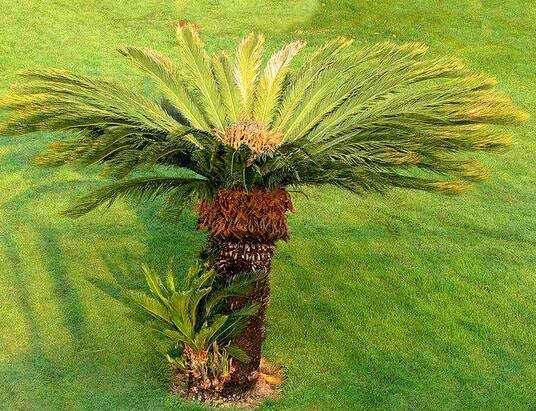
In appearance, Encephalartos woodii has an upright, thick stem, with deep green pinnate compound leaves clustered at the top. The leaflets are stiff and glossy, and the overall plant form is tall and straight, with a certain resemblance to a palm tree. Compared with common cycads, its tree form is taller and more spreading, and its ornamental value is quite outstanding.
Most notably, all known Encephalartos woodii plants are male, and no female plant has ever been found. Therefore, it cannot reproduce naturally through seeds and can only reproduce asexually through suckers sprouting from the base. In other words, the Encephalartos woodii plants around the world are in fact all continuations of the same mother plant, which is also the fundamental reason it is so rare.
In terms of care, Encephalartos woodii prefers warmth, humidity and ample light, and has strong drought tolerance. It fears waterlogging most of all, so when cultivating it, a loose, breathable, well-drained sandy soil should be chosen. For routine watering, the principle of rather dry than wet can be followed. When winter temperatures are low, take care to protect it from the cold and keep it warm, and maintain good ventilation in the environment.
Because it is scarce and strictly protected by international conventions, Encephalartos woodii is extremely rare on the market and is mainly used for ex situ conservation in botanical gardens and for scientific research. For ordinary enthusiasts, learning about this species can also convey the ancientness and fragility of cycads, and thus encourage greater attention to the protection of wild plant resources.