Is the cycad fern a cycad, and what is the difference between the two?
The cycad fern is a member of the vast fern family, a relatively large epiphytic fern. When planted in courtyards, parks and similar places, its ornamental value is quite high, and it also has the ability to purify the air.
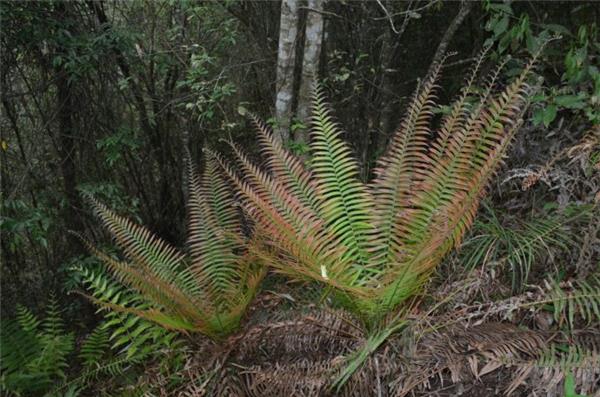
I. Introduction to the cycad fern
Morphological characteristics: a large epiphytic fern, 100-150cm tall. The rhizome is thick and short and upright, with densely grown scales at the top. The leaves are simple, growing radially in clusters at the top of the rhizome, hollow like a bird's nest. The leaf blade is broadly lanceolate, up to 90-100cm long and up to 10-20cm wide, bright green. The sori are elongated, borne on the upper side of the lateral veins, and the indusium is membranous. The leaves of the cycad fern grow radially in a ring around the short rhizome, forming a rosette, with a cylinder in the middle of the rosette, wrapped with black fibers; the plant shape is peculiar, like a bird's nest, with dense leaf clusters and evergreen all year round, making it a beautiful large foliage plant.
Ecological habits: distributed in Asia, Africa and Australia, growing in warm, humid tropical rainforests. It prefers warm, shady and humid environments, often epiphytic on large trees or rocks, and can grow all year round under conditions of high temperature and high humidity. It is not cold-tolerant, with an optimum growth temperature of 20-22°C, and the winter temperature should not be lower than 5°C.
Species of the same genus include: narrow-base bird's nest fern N.antrophyoides, with narrow leaves, oblanceolate, nearly succulent, smooth on both sides, with a sharp pointed tip, slightly revolute after drying.
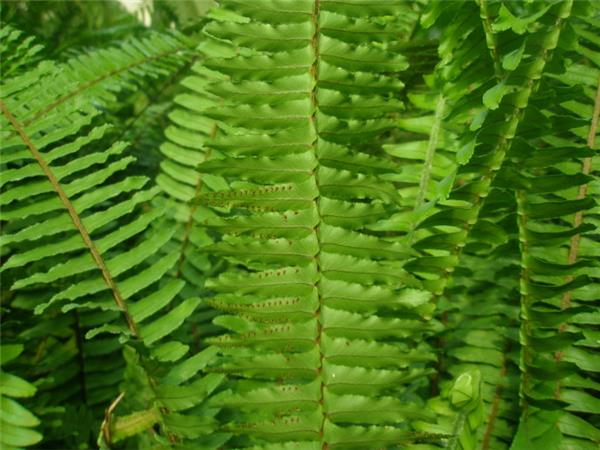
II. Medicinal value of the cycad fern
[Source] Medicinal material basis: the rhizome of the cycad fern, a plant of the family Blechnaceae.
[Harvesting and storage] It can be harvested throughout the year, washed clean, sun-dried or used fresh.
[Chemical constituents] Contains dryocrassin.
[Pharmacological effects] In vitro tests: the cycad fern has relatively strong anti-adenovirus (Ad3) activity. It has a certain killing effect on pig roundworms. Intragastric administration of 3.54g/kg of cycad fern can slightly shorten the prothrombin time of rabbits.
[Identification] (1) Thin-layer chromatography: take 3g of the coarse powder of this product, add 30ml of water, heat and extract for 30min, filter, acidify the filtrate with hydrochloric acid, extract 3 times with ether, combine the filtrates, concentrate to dryness, add 2ml of chloroform to dissolve, spot on a silica gel G thin-layer plate, develop with chloroform-acetone-glacial acetic acid (80:20:2.5), first spray with freshly prepared 0.5% fast blue B salt solution, then spray with 0.1mol/L sodium hydroxide solution; filicic acids show orange-red spots. (2) Take a cross-section slice of this product, add 1% vanillin ethanol solution and concentrated hydrochloric acid dropwise, examine under a microscope, and the internal glandular hairs in the intercellular spaces can be seen to turn red.
[Nature and flavor] Slightly astringent; cool
[Functions and indications] Clearing heat and detoxifying; activating blood and stopping bleeding; expelling parasites. Mainly for colds; burns; traumatic bleeding; ascariasis
[Usage and dosage] Internal use: decocted in soup, 6-15g. External use: appropriate amount, pounded and applied.
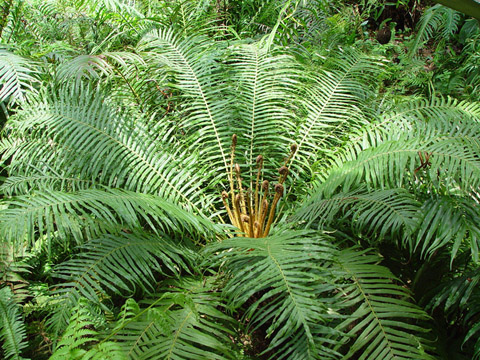
III. The difference between the cycad fern and the cycad
1. In terms of category, the cycad fern is a large fern, while the cycad is an ancient gymnosperm.
2. Although they are very similar in appearance, they differ in their categories and reproduction. The cycad mainly reproduces by seeds and tillering, while the cycad fern reproduces by spores; in addition, tissue culture using spores and young leaves is also often adopted.
3. The cycad fern often grows wild on relatively dry hillsides and roadsides. It prefers a warm climate and is not cold-resistant. It likes to grow in places with ample sunlight and good drainage. It is also different from most other ferns that prefer cool, humid environments; it grows on dry barren slopes and likes sunlight, and in South China it is even used as an excellent choice for landscaping, planted in large patches, with a very natural charm.
4. As a national second-class key protected wild plant, the cycad fern has both the nobility and dignity of the cycad and the elegant refinement of ferns, so it is also often grown as a potted ornamental plant, placed in courtyards or parks. When potted, some Selaginella can also be planted on the pot surface as decoration, which not only looks beautiful but also has a distinctive charm.
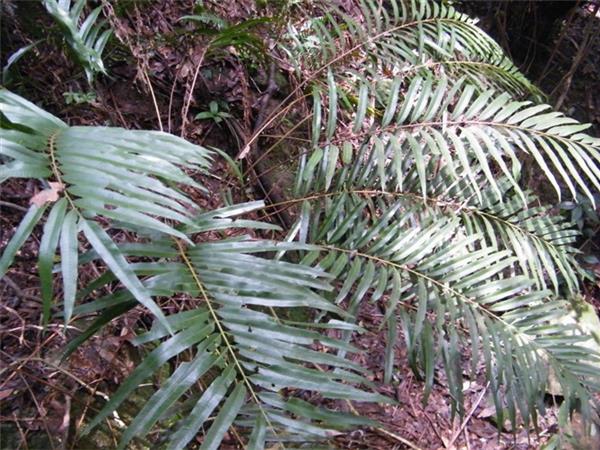
Here it should be noted that the cycad fern has pest problems; nematodes can damage the leaves, causing brown reticulate line spots, which can be controlled with fenamiphos. Sometimes slugs also attack the leaves and should be removed promptly.