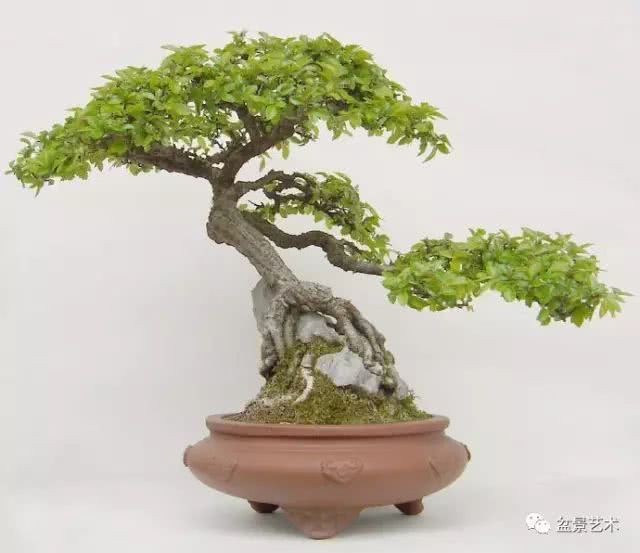
Chinese elm has distinctive characteristics and is well suited to developing old trunks and making bonsai.
Chinese elm (Ulmus parvifolia) is a deciduous tree in the genus Ulmus of the family Ulmaceae, and in folk usage it is also often called small-leaf elm or peeling elm. Its crown spreads wide, its branches are slender and supple, its leaves are small, leathery and glossy, and its bark peels off in scales; on old trunks, mottled patterns of reddish brown and grayish white often form, giving it very prominent ornamental value. Chinese elm is fairly widely distributed in China, commonly found in plains, hills and river valleys, and has strong adaptability.
Compared with the common Siberian elm (Ulmus pumila), Chinese elm has smaller leaves, denser nodes, and bark that begins peeling earlier. It generally blooms in autumn and afterward produces oval samaras, which is relatively rare among plants in the genus Ulmus. Precisely because of its small leaves, dense branches, tolerance of pruning and strong sprouting ability, Chinese elm is regarded as an excellent tree species for making bonsai, and is especially suitable for developing forms such as formal upright, slanting and forest styles.
In addition to ornamental use, Chinese elm wood is tough and can be used for furniture, farm tools and similar purposes; its root bark also has certain customary uses in folk tradition, but if medicinal use is needed, a professional should be consulted. In landscaping, Chinese elm is also often planted as a street tree or courtyard tree, combining shade and ornamental effects.
For care, Chinese elm likes a sunny, warm and humid environment, while also being relatively cold-tolerant and drought-tolerant, and it is best to use loose, fertile, well-drained soil. During the growing season, water should be kept supplied to avoid long-term drought causing leaf drop; pruning is best done during the growing season, and timely bud removal and branch control can make the tree shape more compact and attractive. In daily care, attention should also be paid to ventilation and light transmission, and common pests such as aphids and scale insects should be watched for, so they can be detected and treated early.