How to Create and Care for a Chinese Elm Bonsai
Turning what would otherwise be a tall, large tree species into a bonsai to display at home adds a sense of steadiness and elegance to indoor life, and also lends a good deal of distinguished style. A Chinese elm bonsai certainly has this effect as well. Let's take a look below at how to create and maintain a potted Chinese elm bonsai.
I. Bonsai methods for Chinese elm
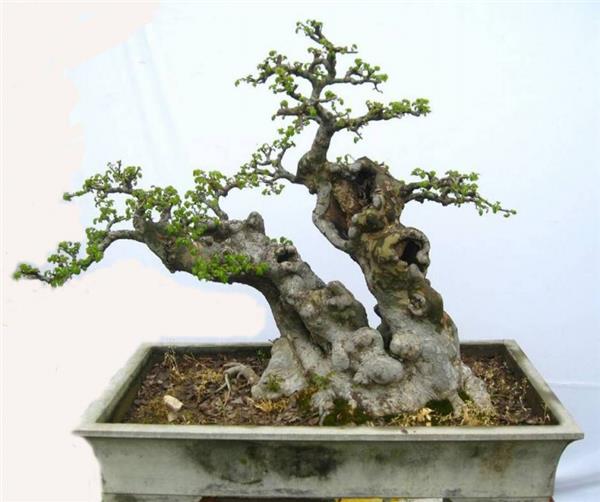
Pot selection: For Chinese elm bonsai, glazed ceramic pots are generally preferred, though purple clay pots can also be used. Pot shapes are diverse and determined by the tree's form, with rectangular pots being the most common. Understated, elegant colors are best.
Soil: It has no strict requirements for soil and is fairly adaptable. For pot cultivation, loose, fertile garden soil or leaf mold is suitable; good air permeability and drainage are what benefit root development and growth and keep the branches of an old specimen lush.
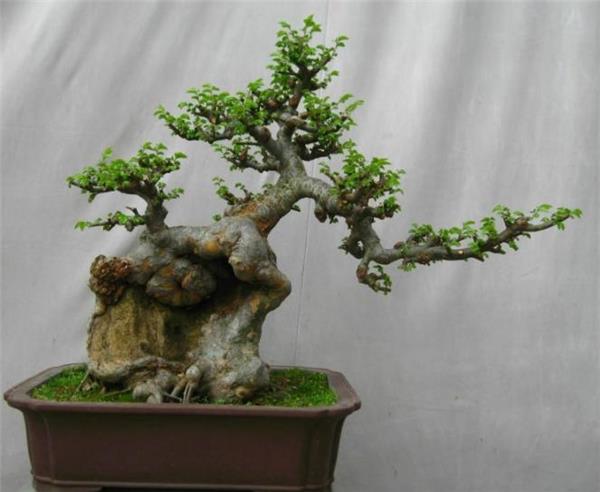
Planting: It is usually planted in spring between February and March before buds break, and it can also be done in autumn. When planting, trim the roots appropriately, cut away overly long roots, and the tree can be raised somewhat. The Chinese elm has a well-developed root system and is suited to root-over-rock bonsai. Planting on rock is relatively difficult; generally you need to choose stone with deep crevices (porous stone can be carved by hand to create crevices). After trimming and arranging the tree roots, insert them into the stone crevices, and tie and bind the main thick roots with palm fiber to hold them in place. When rooting, be careful not to bruise the root system; moss can be used as a cushion. After rooting, smear wet river soil on the outside of the stone, then wrap it with moss, and then plant the roots together with the attached rock into the pot soil. Care for it carefully for 3 to 4 years, until the roots embedded in the stone crevices have grown sufficiently and filled the crevices; then the binding can be removed. At this point the root system and the stone have formed a single whole, and a Chinese elm root-over-rock bonsai is basically complete.
II. Moisture retention for collected Chinese elm stumps for bonsai
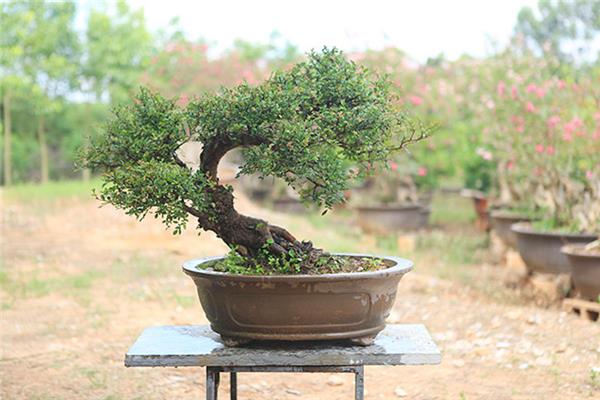
Retaining moisture in pot-grown collected Chinese elm stumps is relatively difficult. Its characteristic is that when grown in a pot, there is relatively little soil and moisture dries out easily. In pot cultivation the pot is often placed on concrete ground, which makes it hard to maintain moisture. We can also use the following methods to retain moisture:
The first method, following the principle of a greenhouse, is to wrap the stump together with the pot using a sheet of transparent plastic film to form a "greenhouse," but be careful with watering.
The second method is to place the flowerpot with the planted collected stump on soil ground as much as possible, so that moisture from the ground can also help the soil in the pot maintain a certain amount of moisture. The soil in the pot will not dry out easily, thereby retaining moisture for the stump.
Here, bonsai enthusiasts in the Northeast in particular should take note. In the north there is often heating in rooms, and some enthusiasts, because they have no space, grow their stumps at home. Be sure to pay attention to watering more; heated rooms are especially dry, so watering is essential.
III. Shaping and pruning techniques for Chinese elm
1. Shaping and pruning of the trunk: Chinese elm branches are relatively hard, and generally by the time branches are three years old they are already difficult to wire and bend. The shaping of the Chinese elm trunk is reflected in the selection and pruning of raw material. Chinese elms collected in the wild should be chosen with more variation in the trunk and with a good skeletal structure, while avoiding raw material that has only a single straight trunk and no branching at all.
2. Shaping and pruning of branches: Branch shaping includes selecting and discarding branches, adjusting and controlling branch direction and vigor, and correcting extending posture, and so on. Generally proceed branch by branch from bottom to top. The main branches should be at a suitable angle to the trunk, evenly distributed, and have a certain spacing between upper and lower ones. Chinese elm raw material is pruned to the trunk or to a first-level side branch. The extension shoot of the main branch is lightly pruned while keeping a side bud; generally buds are left alternately about every two years, so that the extension shoot of the main branch develops in a zigzag manner.
3. Pruning of the crown: After the shaped Chinese elm has formed its basic framework, prune away dead branches, diseased branches, parallel branches, inward-growing branches, and so on each year during the dormant period. Cut back side branches at all levels, leaving 20-30 cm as appropriate, to promote branching. Thin out water sprouts and overlapping branches that affect growth. After buds break in spring, be careful to promptly pinch off overly dense or upright new shoots; generally leave 2-3 buds on main and side branches at each level, gradually cultivating the crown.
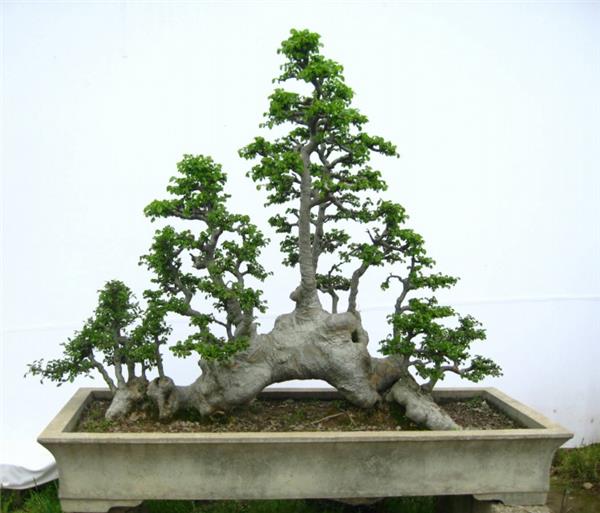
Of course, when creating and caring for a Chinese elm bonsai, everyone should mainly shape it according to their own ideas and creativity, so that your Chinese elm bonsai can be uniquely distinctive and incomparable.