Lucky Bamboo? No—Rohdea japonica: it loves a warm, humid, semi-shaded environment, and this is how to grow it more vigorously
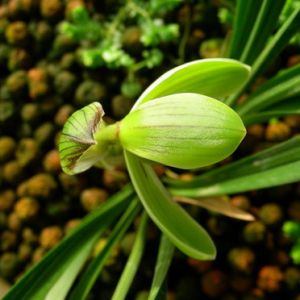
Rohdea japonica (Japanese sacred lily) is a perennial evergreen herbaceous plant in the genus Rohdea of the family Asparagaceae, native to China and Japan; in China it grows wild in shaded, damp spots under forest canopies and beside streams in the Yangtze River basin and areas to the south. Its leaves grow in a clump from the base, thick and upright, deep green all year round; in early summer it sends up a spike inflorescence bearing small pale yellow-white flowers, and in autumn and winter it produces spherical red berries. The green leaves set off the red fruit, and the ornamental period is very long.
Among commonly cultivated forms there are also varieties such as golden-edged Rohdea japonica and silver-edged Rohdea japonica, whose leaf margins or leaf surfaces carry yellow-white markings, making them even more ornamental. It is worth noting that the plants sold on the market as Dieffenbachia and Aglaonema actually belong to the family Araceae and are not the same category as Rohdea japonica in the strict sense, so a little care in distinguishing them is useful when buying.
Rohdea japonica likes a warm, humid, semi-shaded environment and fears direct strong light; placed indoors in diffused light or under the shade of trees, it grows very well. Water it by letting the soil dry between waterings while keeping the potting soil moist but not waterlogged; in summer you can spray the leaves to raise humidity, and during the growing season a few applications of dilute liquid fertilizer are enough. In winter, reduce watering and move potted plants to a cool spot indoors, and they will overwinter successfully.
In traditional Chinese custom, Rohdea japonica symbolizes good fortune and longevity, and it is often used to decorate halls or displayed during festivals; it is a very popular indoor foliage plant. Note that its sap contains calcium oxalate, and contact or accidental ingestion may cause discomfort, so it is best to wear gloves when pruning or repotting, and if there are young children or pets at home, it is advisable to place it somewhere they cannot easily reach.
Related reading