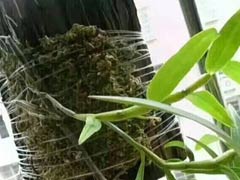
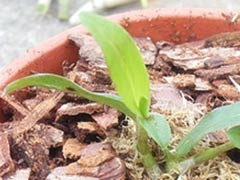
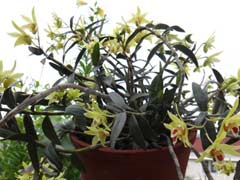
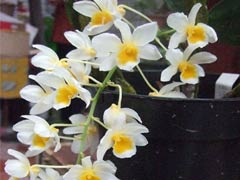
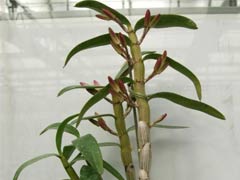
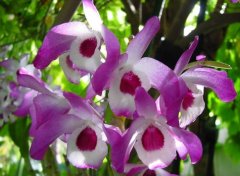
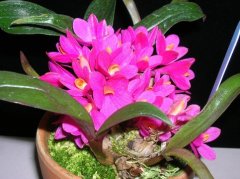
Dendrobium officinale flowers are elegant and beautiful, and with proper care they can bloom successfully
The Dendrobium officinale flower is the bloom of Dendrobium officinale, a plant in the orchid family, genus Dendrobium, and it usually opens in succession at the turn of spring and summer each year. The flowers are small and delicate, mainly pale yellow-green in color, often with purplish-red markings on the lip, and they give off a faint, fresh fragrance, making them highly ornamental. Many people are familiar only with the stems of Dendrobium officinale, but its flowers are equally worth admiring and using.
In terms of care, Dendrobium officinale prefers a warm, humid, well-ventilated semi-shaded environment. During flowering, it especially needs ample diffused light, and direct strong sunlight should be avoided, otherwise the flowers tend to fade early. Watering should follow the principle of watering when dry and letting it dry slightly between waterings, keeping the growing medium just slightly moist. At the same time, misting the surrounding air can raise ambient humidity, but try not to spray water directly onto the flowers. Nutrient needs are not high during the flowering period, and extra fertilizing is generally unnecessary, so as to avoid causing bud drop.
There are also various ways to use Dendrobium officinale flowers. For ornamental purposes, they are suitable for placement on balconies, windowsills, and other well-ventilated, well-lit spots, adding a touch of elegance to the home. For culinary use, many growers dry the harvested fresh flowers and use them to make tea, while others use them in soups or congee; they have a fresh fragrance and a mild taste. It is commonly believed among the public that Dendrobium flowers have some dietary health value, but the specific effects vary from person to person and should be viewed rationally.
As for common problems, some people care for the plant for many years without seeing it bloom, which is mostly related to insufficient light, the plant being too young, or insufficient nutrient accumulation, and it requires patient cultivation. In addition, sudden environmental changes and excessive fluctuations in dryness and moisture can easily cause buds to turn yellow and drop. During the flowering period, the environment should be kept as stable as possible, and moving the pot frequently should be avoided, which can effectively reduce bud drop.
Related Reading