Detailed Guide to Dendrobium Orchid Cultivation Techniques and Management Methods
Dendrobium orchids, along with Cattleya, Phalaenopsis, and Vanda, are ranked as the four major tropical ornamental orchid groups. Dendrobium is one of the largest genera in the Orchidaceae family, with 1500-1600 native species, of which about 60 are found in China. Based on their biological characteristics and different ecological requirements, Dendrobium orchids are divided into two major categories: deciduous Dendrobium and evergreen Dendrobium. Deciduous Dendrobium species produce flower spikes from the upper part of the pseudobulb each year. After flowering, new shoots grow from the base and develop into new pseudobulbs. At the end of the growing season, the leaves drop off or fall in the following spring. The leaves of evergreen Dendrobium can remain without falling for several years, and flower spikes often emerge from the top or upper nodes of the pseudobulb.
There are many varieties of Dendrobium orchids. Currently, commonly cultivated ornamental varieties include Dendrobium densiflorum, Dendrobium thyrsiflorum, Dendrobium phalaenopsis, Dendrobium nobile, Dendrobium primulinum, Dendrobium lindleyi, and Dendrobium fragrant. Dendrobium flowers have beautiful shapes and postures, are colorful and varied, and many species are fragrant. They are important cut flower types and can also be grown in pots.
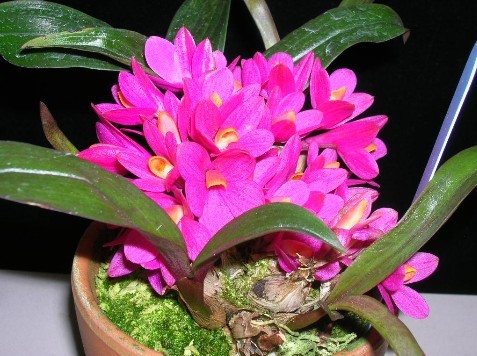
To successfully grow Dendrobium orchids, the following points should be followed according to the biological characteristics of different Dendrobium species:
Shading
Dendrobium orchids in their native habitats often grow epiphytically on tree trunks or rocks in tropical rainforests, and therefore prefer semi-shaded environments. During the vigorous growth period in spring and summer, shading should be applied, with 60%-70% shade. However, during the winter dormant period, more sunlight is needed, generally with 20%-30% shade, or no shading at all.
Temperature maintenance
Dendrobium orchids prefer high temperatures and high humidity. For deciduous species, the overwintering temperature at night can be as low as around 10°C or lower, while evergreen species must not go below 15°C. At the same time, attention should be paid to maintaining a large day-night temperature difference (10-15°C). If the temperature difference is too small, it will seriously affect the growth and flowering of Dendrobium orchids.
Proper watering
Dendrobium orchids like sufficient moisture but are averse to excessive dampness. When too wet, root rot can occur, leading to poor growth or even death. Deciduous species can be kept relatively dry in winter with less watering, but the potting medium should not be excessively dry, and air humidity should not be too low. For evergreen species, as long as the greenhouse temperature is high in winter, sufficient moisture still needs to be maintained.
Frequent misting
During sunny, dry, and hot growing seasons, water should be frequently sprayed around the potted plants to increase air humidity. During the rainy season, when humidity is relatively high, misting can be stopped, and care should be taken to avoid water accumulation in the pots.
Rational fertilization
Dendrobium orchids prefer light but frequent fertilization. During the growing period, decomposed cake fertilizer water can be applied once every 7-10 days, or a 0.1% complete-element compound fertilizer can be applied as a foliar feed. Fertilization should be stopped during the dormant period of deciduous species and when evergreen species are forced into dormancy due to low temperatures.