Detailed Explanation of Key Techniques for Dendrobium Flowering Period Management
Dendrobium is a prized variety among tropical orchids, known for its abundant flowers and brilliant colors, and is one of the largest genera in the orchid family, with more than 1000 native species. The flowering period of Dendrobium is from January to June, lasting as long as half a year, so its management during the flowering period is very important.
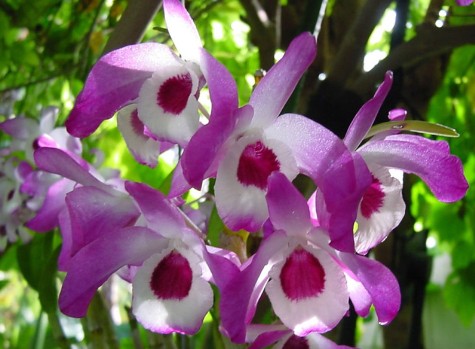
Temperature control Dendrobium is native to the tropical Pacific zone and prefers a warm environment with a large temperature difference between day and night, and it dislikes direct sunlight. Therefore, in winter it should be placed in a semi-shaded greenhouse, with the nighttime temperature controlled at 13°C to 15°C and the daytime temperature at 18°C to 20°C, to promote flower bud differentiation. If the minimum temperature is below 5°C, it will not only affect flowering but also cause the leaves to drop one after another.
Maintain humidity Dendrobium prefers a humid environment and has poor drought resistance, so water should often be sprayed around the plant to maintain a relatively high air humidity of 60% to 70%. If the humidity is insufficient, the leaves are prone to turning yellow and shriveling, directly affecting flowering.
Fertilize at the right timeAfter the beginning of winter, Dendrobium should be fertilized less, and it is suitable to apply phosphorus and potassium fertilizers plus an appropriate amount of nitrogen fertilizer, which can promote flowering. However, after the flower buds appear, fertilization should be stopped. Starting in May, resume applying once every two weeks with rotted, diluted cake fertilizer water to promote growth.
Ventilation and air permeability Dendrobium has very high requirements for the air permeability of the plant, and its medium should be well-aerated bark, charcoal, crushed brick pieces, etc., and indoor air circulation should be maintained.
Pest and disease prevention Dendrobium is susceptible to spider mite damage, which can be controlled with a 1000-fold solution of dicofol, or sprayed with a 1200-fold solution of 40% dimethoate every other week, 2 to 3 times is sufficient.