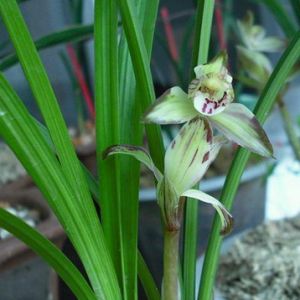
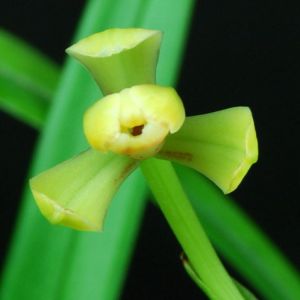
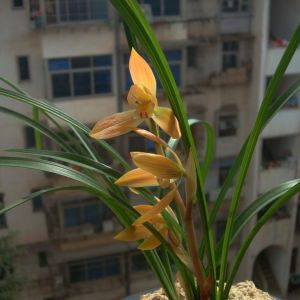
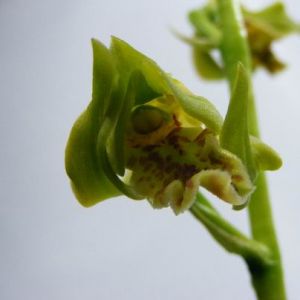
Jiu Yu Bu Qing (Endless Rain) is a poetic cultivar name among Chinese orchids (guolan).
Jiu Yu Bu Qing (Endless Rain) is a rather poetic name among Chinese orchid (guolan) cultivar names, belonging to orchid varieties named after natural scenes. In the naming tradition of Chinese orchids, it is very common to draw on wind, rain, clouds and mist for names; the names are often associated with the depth of flower color, the posture of the bloom, or the mood of flowering, and Jiu Yu Bu Qing is an expression of this approach to naming.
Looking at related varieties, the categories of Cymbidium goeringii (Chunlan), Cymbidium faberi (Huilan), Cymbidium ensifolium (Jianlan), Cymbidium tortisepalum (Chunjian), and Cymbidium goeringii 'Douban' all include evocative cultivar names, and names like Jiu Yu Bu Qing are often mentioned in exchanges among orchid growers. Its literal meaning is that continuous overcast rain lingers and will not clear; used to name an orchid, it gives an impression of coolness, quiet seclusion and enduring appeal, and it also fits the understated, elegant aesthetic tradition of Chinese orchids.
In terms of care, Jiu Yu Bu Qing has broadly similar requirements to other Chinese orchid varieties: the potting medium should be loose, breathable, slightly acidic and clean, and is often used as a mix of bark chunks, Kanuma soil (zhijinshi), and tree-fern fiber (she mu). Watering should follow the principle of letting the medium dry before watering again, and it is important to avoid long-term water accumulation in the pot, which rots the roots; ventilation in the growing environment is especially critical.
Bright, indirect light is preferable; provide appropriate shading in summer to avoid scorching the leaves with strong sun, and maintain a certain day-night temperature difference in autumn and winter to help flower-bud differentiation and normal blooming. During the growing season, apply dilute fertilizer frequently; it is better for the fertilizer concentration to be too weak than too strong, and at the same time pay attention to controlling common pests such as scale insects and red spider mites.
In terms of ornamental value, varieties whose names and floral appearance set each other off are suitable for display on balconies, in courtyards, or in bright, well-ventilated indoor spots, and a clean display on a desk has a special charm. When buying, check that the leaves are intact and free of disease spots and that the roots are robust and not shriveled; disturb the potting medium as little as possible during the acclimatization period, and switch to normal management once the plant has settled in.