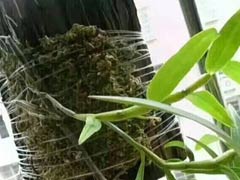
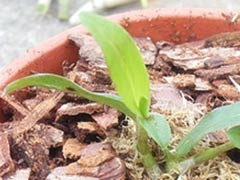
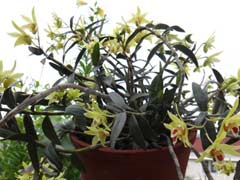
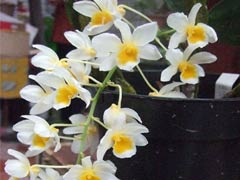
Flickingeria is an epiphytic orchid, and pot cultivation emphasizes warmth and humidity
Flickingeria is the collective name for plants of the genus Flickingeria in the orchid family Orchidaceae. It was once classified under the genus Dendrobium, and later the academic community established it as a separate genus. It is a typical type of epiphytic orchid, often growing attached to tree trunks or rocks in forests, mainly distributed in tropical and subtropical regions, and is relatively common in the humid mountain forests of southern provinces and regions of China such as Yunnan, Hainan, Guangxi, Guangdong and Taiwan, China.
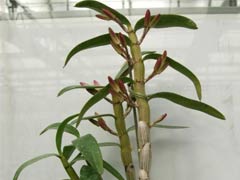
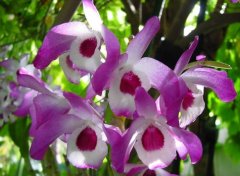
In appearance, the stems of Flickingeria grow in clusters and often bear branches, with some internodes swollen, and the leaves are mostly concentrated at the tips of the branches. When it blooms, the flower color varies by species, commonly white or pale yellow with purplish-red markings. Its flowers are very short-lived, and many species often wither after blooming for only one or two days, which is a notable feature distinguishing it from most common Dendrobium species.
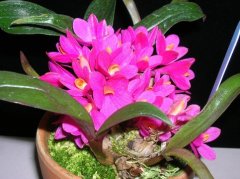
In terms of growth habits, Flickingeria prefers a warm, humid and semi-shaded environment, and fears both cold and intense direct sunlight. For household pot cultivation, you can follow the approach for general epiphytic orchids, choosing loose and breathable media such as bark and sphagnum moss, placing it in a position with ample scattered light and good ventilation, keeping the medium slightly moist but not waterlogged in daily care, paying attention to shading and cooling in summer, and doing a good job of heat preservation and cold protection in winter.
Flickingeria has a distinctive plant shape and elegant flowers, with relatively high ornamental value, and is suitable for flower enthusiasts with orchid care experience to try. It should be noted that it is not the same type of plant as traditional medicinal Dendrobium such as Dendrobium officinale, and the uses differ markedly, so do not confuse them when purchasing and planting. If beginners want to try, they can first assess whether the local climate is suitable, and then gradually figure out the balance between light and watering.
Related Reading