Efficiency-enhanced ammonium bicarbonate has a longer-lasting fertilizer effect, and it should be applied deep and covered with soil
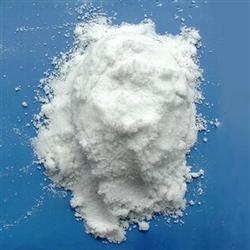
Efficiency-enhanced ammonium bicarbonate is a nitrogen fertilizer made by modifying and processing ordinary ammonium bicarbonate. A common approach is to add nitrification inhibitors, stabilizers or carriers and other additives to make the fertilizer's properties more stable. It retains the characteristics of ammonium bicarbonate, namely its quick action and its supply of ammonium nitrogen, while reducing ammonia volatilization and nutrient loss to a certain extent.
Compared with ordinary ammonium bicarbonate, efficiency-enhanced ammonium bicarbonate has a longer-lasting fertilizer effect, and its nitrogen use efficiency is somewhat improved. It can be used as both a base fertilizer and a topdressing. When applying it, it is still necessary to apply it deep and cover it with soil, and to avoid broadcasting it on the surface or working under high temperatures and strong light, so as to prevent excessive nitrogen loss. When used as a seed fertilizer, it should be kept at an appropriate distance from the seeds to prevent burning the seeds and seedlings, and it should not be mixed directly with alkaline fertilizers for application.
In terms of application, this type of fertilizer is suitable for a variety of field crops and vegetables, and it performs particularly well on crops with high nitrogen requirements. In production it is often used in combination with organic fertilizers and phosphate and potassium fertilizers to achieve balanced fertilization and build up soil fertility. There is a folk saying that ammonium bicarbonate can be used to control pests and diseases; this is an empirical practice, and it should be handled with caution, preferably after consulting local agricultural technicians first.
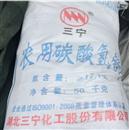
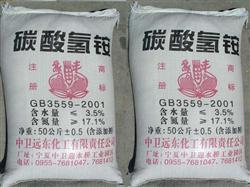
When purchasing, check whether the packaging label is complete, whether the nutrient content and the applicable standard are indicated, and choose products from reputable manufacturers as much as possible. For storage, choose a cool, dry place, pay attention to sealing and moisture-proofing, avoid dampness and caking, and do not store or use it together with alkaline substances.
Related reading