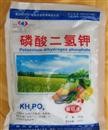
Agricultural potassium dihydrogen phosphate is a phosphorus-potassium fertilizer commonly used in agricultural production
Agricultural potassium dihydrogen phosphate is a water-soluble fertilizer that supplies both phosphorus and potassium nutrients at the same time. Its chemical formula is KH2PO4, and it usually appears as white or colorless crystals that dissolve easily in water. It has a high nutrient content and good water solubility, contains no chloride ions, and is relatively safe for most crops, making it a commonly used fertilizer variety in foliar spraying and integrated water-fertilizer systems.
In application, this type of fertilizer is often used at key stages such as flower bud differentiation, flowering and fruit setting, and fruit enlargement. After spraying, it helps increase the fruit-setting rate, promote full grains, and improve fruit quality. Potassium also strengthens stems and can help improve crop lodging resistance and stress resistance, so it is widely used for field grain crops as well as fruit trees, vegetables, and flowers.
When using it, attention should be paid to concentration and method. For foliar spraying, it is generally diluted with water and sprayed evenly on both sides of the leaves, mostly in the early morning or evening when temperatures are lower and evaporation is slower, because too high a concentration can easily burn the leaves. It can be mixed with acidic and neutral pesticides and used immediately after mixing, but it should be avoided mixing with alkaline substances to prevent reduced fertilizer efficiency.
Products on the market vary in quality, and a simple check can be made when purchasing. Genuine products have uniform crystals and a pure white color, and after dissolving in water the solution is clear and acidic. Counterfeit or inferior products often have rough crystals, and after dissolving they are cloudy or have impurity sediment. It is recommended to buy through proper channels and to pay attention to the fertilizer registration information on the packaging, so as to avoid losses caused by buying fake fertilizer.