What is potassium dihydrogen phosphate, and how should it be used?
What is potassium dihydrogen phosphate? How is potassium dihydrogen phosphate used? Experienced netizens are also asked to help explain. Potassium dihydrogen phosphate is a common fertilizer variety on the agricultural materials market. Potassium dihydrogen phosphate is widely suitable for almost all types of crops, including various economic crops, food crops, melons and fruits, and vegetables. Therefore, Zhongdi Web has compiled the phosphorus...
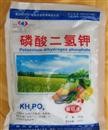 What is potassium dihydrogen phosphate? How is potassium dihydrogen phosphate used? Experienced netizens are also asked to help explain.
Potassium dihydrogen phosphate is a common fertilizer variety on the agricultural materials market. Potassium dihydrogen phosphate is widely suitable for almost all types of crops, including various economic crops, food crops, melons and fruits, and vegetables. Therefore, Zhongdi Web has compiled the effects and usage methods of potassium dihydrogen phosphate, listed in detail below for netizens' reference.
The effects of potassium dihydrogen phosphate:
Potassium dihydrogen phosphate is a quick-acting phosphorus-potassium compound fertilizer, containing 22.8% phosphorus and 28.6% potassium. The pure product of potassium dihydrogen phosphate is white crystals, the solution is acidic, non-toxic, odorless, non-volatile, non-deliquescent, stable in nature, easily soluble in water, and very easily absorbed and utilized by plants. It is also an ideal foliar fertilizer. Dilute solutions of potassium dihydrogen phosphate are often used for root-outside fertilization (foliar fertilizer) or as a nutrient solution for soilless soilless cultivation. Using potassium dihydrogen phosphate on crops can achieve good yield-increasing effects.
Application methods of potassium dihydrogen phosphate
1. Foliar fertilization method:Potassium dihydrogen phosphate is mostly used for root-outside fertilization of crops, especially for fruit trees and vegetables, and can also be used for root-outside fertilization of melons and wheat. Generally, spray 50~75 kg per mu at a concentration of 0.1%~0.2% potassium dihydrogen phosphate, and spray continuously 2~3 times, which can increase crop yield by about 10%. For solanaceous vegetables, the concentration used is 0.3%, and the spraying times are the first at the early flowering stage, the second at the early fruiting stage, and the third 7 days after the second spraying.
Tomatoes sprayed with potassium dihydrogen phosphate can effectively increase plant height and stem thickness, and the number of leaves and flower buds increases; peppers sprayed with potassium dihydrogen phosphate all effectively increase plant height, plant width and leaf length, and the number of branches increases; eggplants sprayed with potassium dihydrogen phosphate all increase in plant height and plant width, and the leaves become longer; vegetables sprayed with potassium dihydrogen phosphate can also improve disease resistance.
Suitable concentrations for spraying potassium dihydrogen phosphate on crops: rice is sprayed once each at the heading stage, full heading stage and grain-filling stage at a concentration of 0.5%~1%; corn is sprayed once at pollination at a concentration of 0.5%; cotton is sprayed once each at the bud stage, initial flowering stage and boll-setting stage at a concentration of 0.3%~0.5%; grapes are sprayed 2~3 times at the new shoot growth stage and berry enlargement stage at a concentration of 0.2%~0.3%; watermelon is sprayed after each harvest at a concentration of 0.2%~0.3%.
2. Use as seed fertilizer:Potassium dihydrogen phosphate can be used as crop seed fertilizer, but before sowing, the seeds need to be soaked in a potassium dihydrogen phosphate solution at a concentration of 0.2%~0.5% for 18~20 hours. Afterward, remove them and dry them, and they can be applied as seed fertilizer when sowing crops.
3. Use for seed dressing:Use a 1%~2% potassium dihydrogen phosphate aqueous solution and evenly spray it on the seeds with a sprayer or mist sprayer. After brief drying, sowing can be carried out. About 10 kg of seeds are dressed per 1 kg of solution.
4. Use for root dipping:Dip crop roots in a 0.5% potassium dihydrogen phosphate aqueous solution.
Precautions for applying potassium dihydrogen phosphate:
Precaution 1.When using potassium dihydrogen phosphate for spraying, it is necessary to grasp the effective spraying period. Generally, choose the peak period of phosphorus and potassium nutrient absorption by crops, for example, the booting or heading and flowering stage of wheat and corn; before and after cotton flowering; the tuber enlargement stage of tuber crops; and the pre-flowering, post-fruit-setting and fruit enlargement stages of fruit trees. Do not apply on rainy days, do not apply when there is morning dew, and do not apply at noon on sunny days; it is advisable to spray before 10 a.m. and after 4 p.m.; on cloudy days, it can be sprayed all day.
Precaution 2.When potassium dihydrogen phosphate is used for topdressing, it is usually carried out by foliar spraying. However, foliar spraying is an auxiliary fertilization method. It must be based on applying sufficient base fertilizer in the early stage of the crop and using topdressing well in the middle stage, and only by seizing the key points and spraying in time can better results be achieved. Potassium dihydrogen phosphate cannot replace the role of any other fertilizer.
How to identify potassium dihydrogen phosphate
What is the role of potassium fertilizer?