What Kind of Fertilizer Is Diammonium Phosphate and Key Points for Its Scientific Application
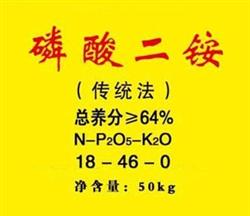
Diammonium phosphate is a commonly used phosphorus-containing compound fertilizer, whose full name is diammonium hydrogen phosphate; it contains two main nutrients, phosphorus and nitrogen. It usually appears as grayish-white or light gray granules and has good water solubility, dissolving easily after being applied to the soil so that crop roots can absorb and use it. Because of its relatively high nutrient content and fairly stable properties, this fertilizer is widely used on many crops, including grain crops, vegetables and fruit trees.
In terms of nutrient characteristics, diammonium phosphate is mainly phosphorus-based and also contains a certain proportion of nitrogen. It is suitable for use as a base fertilizer and seed fertilizer and is quite effective in promoting root development at the seedling stage and enhancing stress resistance. Its aqueous solution is weakly alkaline, so applying it in acidic or slightly acidic soil gives more obvious results; when used on alkaline soil, methods should be chosen carefully to minimize loss of fertilizer efficiency.
When applying diammonium phosphate, it is mostly used as a base fertilizer and applied deep, or placed in furrows or holes and then covered with soil. Take care not to let the fertilizer come into direct contact with seeds and young roots, so as to avoid burning the seeds and seedlings. When used as a seed fertilizer, it should be kept at a certain distance from the seeds, and the amount used should not be too large. Applying it together with organic fertilizer can reduce the fixation of phosphorus by the soil and improve fertilizer use efficiency.
In use, note also that diammonium phosphate should not be mixed directly with alkaline fertilizers such as plant ash, otherwise reactions can easily occur, causing ammonia volatilization and nutrient loss. During storage, it should be kept in a cool, dry and well-ventilated place, sealed and protected from moisture to prevent moisture absorption and caking. For long-term large-area application, it is best to combine it with soil test results and match it reasonably with other fertilizers to maintain balanced soil nutrients.