What is diammonium phosphate? How should diammonium phosphate be used properly?
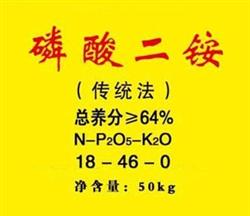
What is diammonium phosphate? How should diammonium phosphate be used properly? We also ask knowledgeable readers to help explain. Diammonium phosphate is a binary high-concentration compound fertilizer with low nitrogen and high phosphorus. Diammonium phosphate contains 18% N and 46% P2O5, and its total nutrient content can reach a high concentration of 64%. In terms of nutrient supply, it has the characteristics of low nitrogen, high phosphorus and no potassium. Because...
 What is diammonium phosphate? How should diammonium phosphate be used properly? We also ask knowledgeable readers to help explain.
Diammonium phosphate is a binary high-concentration compound fertilizer with low nitrogen and high phosphorus. Diammonium phosphate contains 18% N and 46% P2O5, and its total nutrient content can reach a high concentration of 64%. In terms of nutrient supply, it has the characteristics of low nitrogen, high phosphorus and no potassium. Therefore, Zhongdiwang has compiled the product characteristics and usage methods of diammonium phosphate, listed in detail below for readers' reference.
Characteristics of diammonium phosphate:
Diammonium phosphate is also called diammonium hydrogen phosphate. Diammonium phosphate is easily soluble in water, and its aqueous solution is alkaline. Diammonium phosphate is a high-concentration quick-acting chemical fertilizer, suitable for various soils and crops, and its effect is even more significant on crops that like nitrogen and need phosphorus. It is commonly used as a base fertilizer and a topdressing fertilizer. Diammonium phosphate contains two nutrient elements, nitrogen and phosphorus, so it can be regarded as a compound fertilizer, and its concentration is relatively high. Therefore, when used as a seed fertilizer, avoid direct contact with seeds.
Diammonium phosphate is suitable for various soils and crops. Diammonium phosphate contains two nutrient elements necessary for crop growth, nitrogen and phosphorus. The nitrogen element is an important element that constitutes proteins and promotes the formation of proteins and chlorophyll; the phosphorus element participates in photosynthesis, respiration and so on within the crop. It can not only promote faster growth of the crop root system and aboveground parts, but also improve the quality of crop fruits and the crop's ability to adapt to the external environment, promote early ripening of fruits, and improve crop quality.
Usage methods of diammonium phosphate:
Ammonium phosphate is suitable for use as a base fertilizer. The large amount of phosphorus in the base fertilizer can guarantee the needs of grain and crop development in the later growth period of the crop, and also ensure yield. Since phosphorus in diammonium phosphate is 3 times that of nitrogen, it can be used alone as a base fertilizer for leguminous crops that like phosphorus and have strong nitrogen fixation ability, and the application amount is preferably 8-10 kg.
When using diammonium phosphate as a base fertilizer on other crops, it needs to be combined with an appropriate amount of single-element nitrogen and potassium fertilizers to adjust and increase the proportions of nitrogen and potassium. The role of crop base fertilizer is mainly to supplement nutrition in the middle and late stages. Therefore, ammonium phosphate should be applied deeply. Phosphorus in ammonium phosphate has poor mobility in soil, and only when it is applied to the distribution area of the crop's main root system can the absorption efficiency be improved. The depth of base fertilizer application should differ for different crops, especially fruit trees, which require 40-60 cm, vegetables 15-20 cm, and grain crops 20-30 cm.
The amount of diammonium phosphate used as a base fertilizer varies depending on the crop type and the fertilization status of the previous crop. For example, farmland that has been applied with organic fertilizer can apply less; plots that have been applied with ammonium phosphate year after year can apply less or switch to a ternary compound fertilizer.
Generally, the suitable recommended amount of ammonium phosphate for base fertilizer of grain crops is about 10-12 kg, and for cotton an average of 12-16 kg per mu. As for adjusting nitrogen and potassium fertilizers and increasing the proportion of nitrogen fertilizer, it is not necessary to add all of it in the base fertilizer. Nitrogen can also be added at topdressing time, and the effect will be better.
Precautions for using diammonium phosphate:
Although diammonium phosphate is quick-acting, it is not suitable for use as topdressing or flushing fertilization. Because when used as topdressing, granular diammonium phosphate is broadcast on the surface, dissolves slowly and only a little dissolves, and the dissolved phosphoric acid has very poor migration ability to the lower soil layers. While moving, it is also fixed, and the fixed product is insoluble in water and cannot be absorbed and used by the root system, thus losing its fertilizer effect.
If diammonium phosphate is used as a water-flushing fertilizer, the relatively expensive phosphorus will be carried away by surface runoff, or accumulate on the soil surface while the crop roots are mainly distributed underground, so the roots cannot reach the fertilizer, the fertilizer effect is poor, and phosphorus fertilizer is also lost from the soil surface, polluting the water environment. This two-way problem should not occur.
What are the common nitrogen fertilizers?
Is large-granule urea good?