Evening Primrose Seed Planting Method and Care Essentials Explained
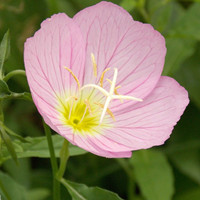
Evening primrose seeds come from the evening primrose, a plant in the Onagraceae family, named for its flowers that open in the evening and give off a delicate fragrance at night. Its seeds are very small, hidden inside capsules that split open once mature, and are mostly dark brown in color. When collecting them, it is best to do so when the fruit is dry but has not yet fully split, otherwise the seeds scatter easily onto the ground.
Sowing is generally done in spring or autumn, when mild temperatures give a higher germination rate. Because the seeds are small, broadcasting is usually used, and the soil covering should be shallow, just a thin layer of fine soil. After sowing, keep the soil slightly moist and place it in a spot with indirect light; at suitable temperatures, seedlings emerge in about one to two weeks.
Once the seedlings have grown a few true leaves, they can be thinned or transplanted, with a spacing of around 20 cm between plants so they have enough room to grow. Evening primrose is drought-tolerant and hates waterlogging, so water only when the soil is dry and remember to drain during the rainy season. It is not demanding about soil, and mixing some sand into garden soil is enough for it to grow well.
Besides being used for propagation, evening primrose seeds are also the raw material for extracting evening primrose oil, as the seeds contain unsaturated fatty acids. When the plant blooms, the flowers are golden yellow, and planting them in masses gives a fine ornamental effect, so they are often used in flower borders and roadside landscaping. For home growing, it usually takes several months from sowing to flowering, and with patient care you will see a full cluster of yellow flowers.
Related Reading