Characteristics and Uses of Leucaena: Getting to Know This Nitrogen-Fixing Legume Tree
Leucaena is an evergreen tree or shrub in the genus Leucaena of the legume family (Fabaceae), native to tropical America and now widely planted in tropical and subtropical regions. Its leaves are bipinnately compound, with small, neatly arranged leaflets that look somewhat similar to those of the sensitive plant (Mimosa). When it blooms, it bears head-like inflorescences, with small white fluffy ball-shaped flowers clustered together, giving it some ornamental value; the pods it produces are flat and turn brown when mature.
The most striking feature of leucaena is its fast growth and strong adaptability; it tolerates drought and poor soil, and its roots form a symbiosis with rhizobia that can fix nitrogen from the air, helping to improve the soil. For this reason, it is often used as a green manure plant, a soil-and-water conservation tree, and a fuelwood plantation species, and it can survive well even on barren land.
In agricultural use, the young branches and leaves of leucaena have a relatively high protein content and are often used to make livestock feed or plowed under as green manure. However, note that it contains mimosine, and livestock eating large amounts of it alone over a long period may suffer adverse effects, so it should be reasonably combined with other feeds when fed. In addition, it has a long flowering period and is also one of the common nectar plants in tropical regions.
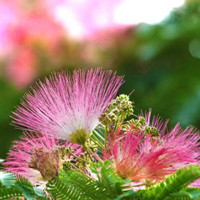
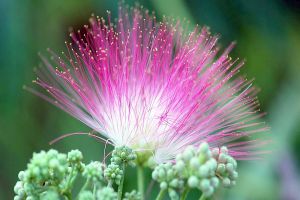
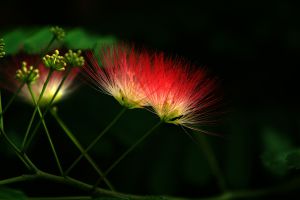
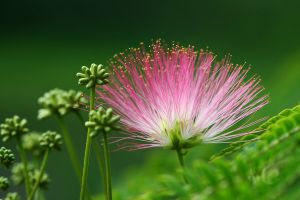
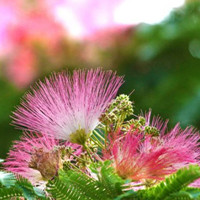
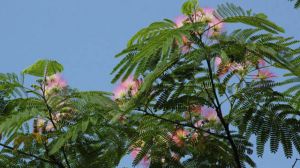
Many people easily confuse leucaena with the silk tree (Albizia julibrissin); in fact, the two are not the same. The silk tree's flowers are mostly pink, the tree is tall, and it is mostly used as an ornamental or street tree; leucaena's flowers are white, the plant is relatively shorter, and its uses lean more toward feed and green manure. In addition, leucaena has a strong ability to reproduce by self-seeding, and in some areas it tends to spread, so its planting range should be controlled to avoid affecting native vegetation.
Related Reading