Is the silk tree flower a herbaceous plant? An introduction to the plant properties of the silk tree flower
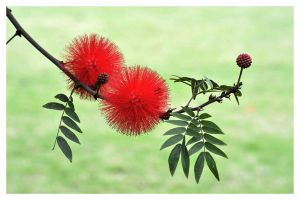
The family and genus of the silk tree flower
The silk tree flower is a deciduous tree of the genus Albizia in the Fabaceae family.
Other names of the silk tree flower
The silk tree flower is also called night silk tree, night silk tree, velvet flower tree, bird velvet tree, and bitter love flower.
The origin of the silk tree flower
The silk tree flower originates from the provinces and cities of China from the Northeast to South China and the Southwest, and generally grows on hillsides.
It is distributed in Africa, Central Asia to East Asia, and is also cultivated in North America.
The morphological characteristics of the silk tree flower
The silk tree, a deciduous tree, can reach a height of 16 m, with a spreading crown, angular branchlets, and young branches, inflorescences and leaf rachises covered with tomentum or short pubescence. The stipules are linear-lanceolate, the leaves are small and fall early.
The capitula are arranged in panicles at the branch tips; the flowers are pink; the calyx is tubular, 3 mm long; the corolla is 8 mm long, with triangular lobes 1.5 mm long, and both the calyx and corolla are covered with short pubescence; the filaments are 2.5 cm long.
The pods are strap-shaped, 9-15 cm long and 1.5-2.5 cm wide; young pods have soft hairs, while old pods are hairless.
The flowering period of the silk tree flower is from 6-7 months; the fruiting period is from 8-10 months.
Related Articles
- How to prevent and control pests and diseases on desert rose? Ventilation and dryness are the key to prevention
- The three main causes of cotton diseases: climate, seeds and cultivation
- How to Grow Bird's Nest Fern in Water? Master Temperature, Light, and Water Change Techniques
- A Complete Guide to Identifying and Controlling Common Potted Flower Pests
- Do Carnivorous Plants Need Watering? Pot Watering and Wet/Dry Assessment Methods
- How to manage cotton during the flowering and boll-setting stage? Apply flowering and boll fertilizer heavily, use chemical regulation and pruning to prevent premature senescence
- How to Grow Chinese Hibiscus? Master These 5 Key Points for Blooms All Year Round
- How to Grow Tulips in Water? The Complete Process from Bulb Preparation to Blooming