An Introduction to the Variety Characteristics of Lantana and Its Container Care Methods
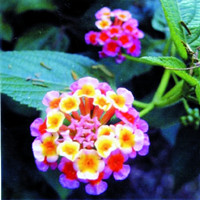
Lantana, also known as shrub verbena and five-color flower, is an evergreen shrub of the genus Lantana in the verbena family. Its most striking feature is that a single flower cluster keeps changing color as it opens, often shifting from yellow to orange and from pink to red, so several flower colors often coexist on the same plant, giving a long ornamental period; in warm regions it can bloom almost all year round.
Lantana likes a sunny, warm and humid environment. It tolerates heat and drought but not cold; at low temperatures its above-ground parts are easily damaged by frost, so in the north it is mostly grown in containers and moved indoors to overwinter after winter sets in. It is not demanding about soil, preferring loose, fertile, well-drained sandy loam. During the growing period, keep the light sufficient so that flowering is more profuse; water by letting the soil dry between waterings, and avoid long-term waterlogging that causes root rot. Its branches grow quickly and it tolerates pruning; cutting back appropriately after flowering can keep the plant compact and encourage new shoots.
Propagation is mainly by cuttings. In spring and summer, cut healthy branches and insert them into a sand bed, keeping it moist; they root fairly easily. Seed sowing can also be used for raising seedlings. For container growing, choose a pot with good air permeability and repot once a year or every other year; apply sufficient base fertilizer when repotting, and during the peak growing season apply light fertilizer frequently, which helps it continue to form buds and bloom.
It should be noted that the whole lantana plant has a strong odor and its sap is somewhat toxic. When pruning or repotting, it is advisable to wear gloves and to prevent children and pets from accidentally eating it. In addition, in some warm areas of the south it has strong reproductive capacity, so when planting it in the ground its range should be controlled to prevent it from escaping and spreading and affecting local vegetation.
Related Reading