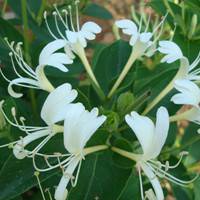
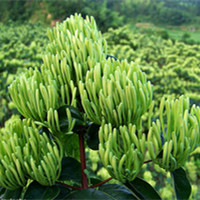
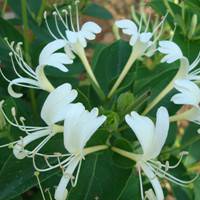
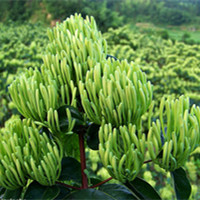
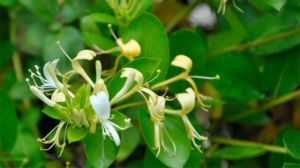
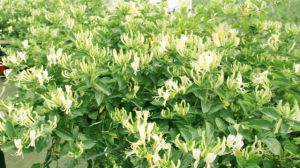
The main differences between Lonicera macranthoides (Shan Yin Hua) and Japanese honeysuckle (Jin Yin Hua) lie in their source, flower buds and place of origin.
Shan Yin Hua and Jin Yin Hua have similar names, and their flower buds look very much alike too; both are the flower buds of plants in the genus Lonicera of the family Caprifoliaceae, so they are often lumped together in the market. In fact, the two are not the same medicinal herb, and there are clear differences from plant source to appearance. Understanding these differences helps you buy and use them correctly.
The most fundamental difference lies in the plant source. In the pharmacopoeia, Jin Yin Hua comes only from the single species Lonicera japonica, while Shan Yin Hua is a collective term for the flower buds of several closely related plants such as Lonicera macranthoides, Lonicera hypoglauca and Lonicera confusa. Simply put, Jin Yin Hua is a single variety, whereas Shan Yin Hua is a general term for a group of plants, and the two are also listed separately in the medicinal material standards.
In terms of flower bud form, Jin Yin Hua is rod-shaped, thick at the top and thin at the bottom, slightly curved, with dense short soft hairs on the surface, and mostly yellow-white or green-white in color; Shan Yin Hua buds are also rod-shaped, but have sparse surface fuzz, and some varieties are almost smooth and hairless. In growth habit, Jin Yin Hua is often pruned and cultivated as a woody shrub, while Shan Yin Hua mostly keeps a climbing vine growth form. As for place of origin, Jin Yin Hua is better known from the Shandong and Henan areas, while Shan Yin Hua is mainly distributed in southern regions such as Hunan, Guizhou and Guangxi.
In terms of use, both can be used as medicine, and are also often steeped in water as a tea substitute or made into cold drinks, only the types and proportions of their active ingredients differ, and their emphasis in efficacy is also slightly different. When buying them day to day, you can tell them apart by observing the flower bud form, checking the surface fuzz, and learning about the place of origin; if you intend to use them medicinally, it is advisable to look for the specific variety name marked on the packaging, and consult a professional when necessary.