The Legend of the Narcissus and the Origin of the Beautiful Name "Fairy of the Waves"
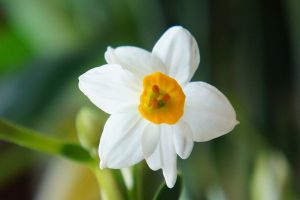
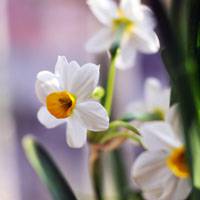
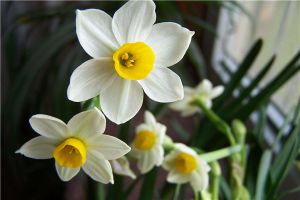
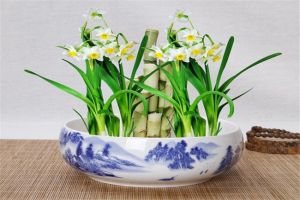
The narcissus is a perennial herbaceous plant of the amaryllis family, with a long history of cultivation in China; because it is often grown in basins of clear water and its blooms are elegant and refined, it has been honored with the name "Fairy of the Waves." Around this flower, many moving stories circulate among the people, with Eastern and Western versions differing from one another, adding no small amount of cultural color to the narcissus.
The more widely known Chinese legend is connected to figures from high antiquity. It is said that Emperor Yao's two daughters, Ehuang and Nüying, both married Emperor Shun, and after Emperor Shun passed away the two died for love in the Xiang River; one account holds that their souls transformed into narcissus flowers on the riverbank. There is also a legend that the narcissus was originally a fairy from heaven who, longing for the clear waters of the mortal world, came down to live in the water, and from this came the beautiful name "Fairy of the Waves."
The Western legend comes from Greek mythology. The beautiful youth Narcissus fell in love with his own reflection in the water, watching over it day after day and refusing to leave, and in the end he was transformed into a flower by the waterside; the scientific name of the narcissus is also related to this. In Western culture, the narcissus often carries the imagery of narcissism, forming an interesting contrast with its meaning of elegance and purity in China.
In traditional Chinese culture, the narcissus ranks among the famous flowers and is often placed on desks and tables during festivals, symbolizing purity, good fortune and beauty. People grow narcissus and admire narcissus, savoring both the bearing of the flower and these stories passed down from generation to generation.
Related Reading