Characteristics of Rixiang Gui (Osmanthus fragrans 'Rixianggui') and an Introduction to Its Care and Propagation Methods
Rixiang Gui (Osmanthus fragrans 'Rixianggui') is a cultivated variety of osmanthus in the genus Osmanthus of the family Oleaceae, named for its ability to bloom almost all year round with continuous fragrance. Unlike ordinary osmanthus, which blooms in a concentrated period around the Mid-Autumn Festival, its flowering period is spread throughout the year, and it often manages scattered blooms even when temperatures are relatively low, making it a rare four-season-flowering type within the osmanthus family.
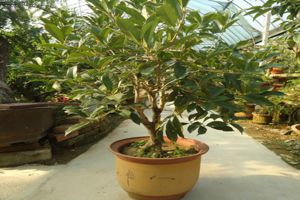
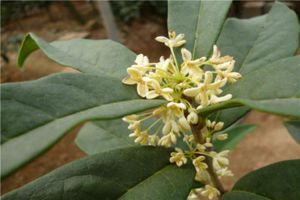
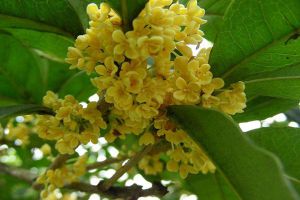
In terms of morphology, Rixiang Gui is an evergreen shrub or small tree, relatively low-growing, with strong branching ability and rather supple branches, easily trained into a full crown shape. Its flower color is on the pale side, mostly yellowish-white; the flowers are small but produced in great numbers, with a light, lingering fragrance. It has fairly strong adaptability, and its cold tolerance ranks among the better osmanthus varieties; it can be grown in the open ground in warm regions, while in cold regions it is mostly kept in pots.
For care, Rixiang Gui prefers full sunlight and also tolerates partial shade, and it is suitable for planting in loose, fertile, well-drained, slightly acidic soil. Water routinely by letting the soil dry between waterings and avoiding standing water in the pot; during the growing season, apply thin fertilizer frequently, and supplement appropriately with phosphorus and potassium fertilizer before and after flowering to help it keep blooming. During care, also pay attention to ventilation in the environment to reduce pests and diseases caused by muggy, humid conditions.
Pruning is generally done in spring before bud break, mainly to thin out overly dense branches, leggy branches and diseased or weak branches, keeping the plant shape open for ventilation and light; light shortening after flowering can encourage new branches and increase the number of flowers. Cuttings are the most commonly used method of propagation, though layering or grafting can also be used, and these are more likely to succeed when done in spring or autumn. With its long flowering period and pleasant fragrance, Rixiang Gui is suitable for open-ground planting in courtyards, pot cultivation on balconies or making into bonsai, making it an ornamental flowering tree that combines both ornamental and fragrance value.