What are the propagation methods for Osmanthus fragrans 'Rixianggui'? A detailed explanation of common propagation techniques
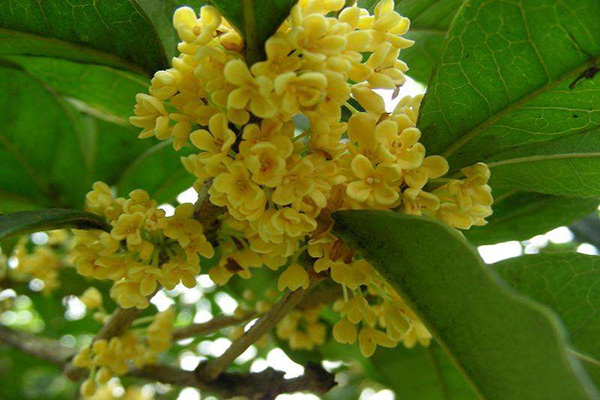
I. Layering
1. To use this method, the time is generally set at the end of March and the beginning of April.
2. Look around the mother plant to see how many layers we can make, then observe the direction in which the branches extend, and dig a small trench along that direction. This trench does not need to be too deep; 20 cm is enough, and the width is the same figure.
3. After that, what we need to do is press it directly into the trench, then firm it with soil, then water it a certain amount, and finally shape the soil in that spot into a steamed bun shape.
II. Air layering
1. This is also a very important method. Generally, we do this in the middle of September and October.
2. The thing we need to use is a moso bamboo tube. Split it into two pieces, then put some soil in each piece; the soil needs to be wet. After that, fit it around a robust branch of the Osmanthus fragrans 'Rixianggui', then prop it up with a support, and keep adding water to keep it moist.
3. After about a month, new roots are very likely to grow out. By the spring of the following year, we take it down and transplant it well, and it can become a new tree. After about three years, we can see its flowers.
III. Sowing
1. At the end of May and the very beginning of June, it will grow relatively mature fruit. At this time we remove its outer shell, then let it dry in the shade, and then cover it with wet sand.
2. By the spring of the following year, it can be scattered on the seedbed, and by March it will sprout. After about one year, its seedlings will be about 15 cm. After two or three years, it will grow to 1 m tall, and at this time we can transplant it to the desired place and let it grow well.
IV. Grafting
For this one, what needs to be selected is a tree that is already 20 years old. On it, choose a robust lateral branch that has grown for one year, then cut its two bud scales and graft it onto a privet rootstock, then wrap it with film. It can sprout in this season, but flowering takes ten years. Moreover, this method has a very bad drawback, which is that its trunk will not be straight, so it is not suitable to plant it beside a road as a landscaping tree.
V. Cuttings
This is done in February. At the beginning, pests need to be eliminated and disinfection carried out, then it is inserted into the soil, covered with a layer of grass, and then watered. When it grows to about 6 cm, it can be taken out as a seedling.