A detailed guide to the five major schools of bonsai art: the Lingnan, Su, Yang, Chuan and Hai styles each have their own distinct character
The five major schools of bonsai art are the regional style systems formed over the long development of Chinese bonsai, usually referring to the Lingnan, Chuan, Su, Yang and Hai schools. Because of differences in local climate conditions, tree material resources and aesthetic traditions, the five schools each place emphasis on different shaping techniques and artistic goals, and together they make up the main face of Chinese bonsai art.
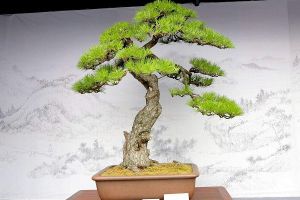
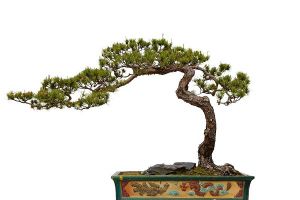
The Lingnan school is centred on the Guangdong and Guangxi area, emphasising natural wild charm and stressing trunk chopping and branch growing; the tree forms are mostly majestic large-tree styles, with clean transitions in the branch pads, and it commonly uses species such as Chinese plum yew (Sageretia thea), orange jessamine (Murraya paniculata) and elm. The Chuan school prevails in Sichuan and is known for traditional wiring and bending skills; its shaping stresses regular forms, with aged, vigorous and sturdy trunks, carrying a rich Bashu flavour.
The Su school is represented by Suzhou; its traditional shaping stresses round, layered pads, its style is elegant and refined, and its material is mostly native tree species with graceful posture. The Yang school is centred on Yangzhou; its tied pads are neat and delicate, with clearly defined layers, and its miniature palm-sized scenes especially show its skill. The Hai school formed in Shanghai and is good at absorbing the strengths of all the schools; it is mainly naturalistic, with brisk and smooth techniques, and its subjects and forms are also more varied.
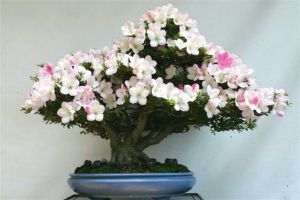
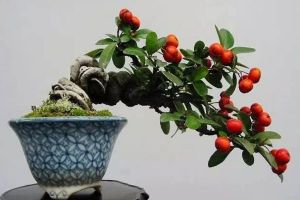
For bonsai enthusiasts, understanding the schools helps in grasping different shaping ideas and pruning and wiring methods. In practice there is no need to be bound to any one school; you can flexibly learn from them in line with your local climate and the tree material at hand. Whether it is Japanese black pine (Pinus thunbergii), summer azalea, firethorn or Chinese flowering quince (Chaenomeles), as long as it is cared for properly and shaped by the right methods, you can grow a bonsai work full of charm.
Related reading