How to Care for a Bromeliad (Guiana Chestnut) and Common Problems Explained
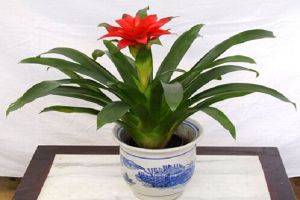
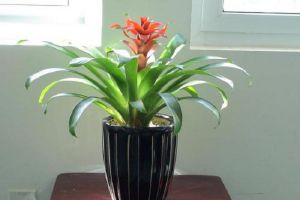
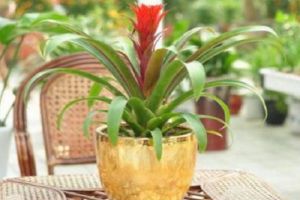
The term "Hongyun Dangtou" generally refers to ornamental bromeliads in the Bromeliaceae family, named for their flower spikes that grow at the top of the plant with brilliant red color, symbolizing the arrival of good fortune. Native to the tropical regions of the Americas, it is a perennial evergreen herb with broad, strap-like leaves that layer up from the base into a rosette, forming a central cup that can hold water.
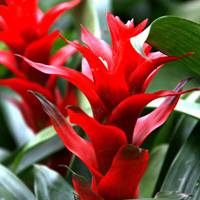
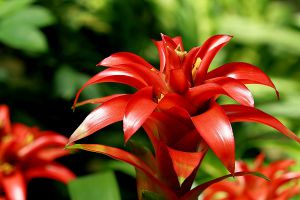
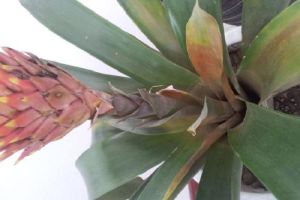
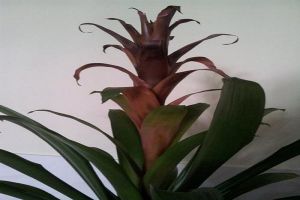
The "flowers" we usually admire are actually mainly the brightly colored bracts; the true flowers are smaller and hidden among the bracts, with common colors including red, yellow, orange, and pink, and a single blooming period can last for months. Note that a bromeliad typically blooms only once in its lifetime, and after flowering the mother plant gradually declines, but the offsets that grow from the base can be separated and cultivated into new plants.
For care, bromeliads prefer a warm, humid, semi-shaded environment and are sensitive to direct strong sunlight and low-temperature frost damage, making them suitable for indoor spots with bright, indirect light. When watering, besides keeping the potting soil slightly moist, you should also pour clean water into the leaf cup and replace it regularly to prevent the water from going bad and causing root or crown rot. In winter, move them indoors to keep warm and reduce watering appropriately.
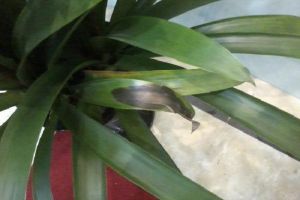
In daily care, if the leaves turn yellow, wilt, or blacken, it is usually related to excessive light, dry air, unsuitable temperatures, or improper watering; root rot is often caused by long-term waterlogged potting soil, and once discovered, the affected parts should be trimmed away promptly and the plant repotted in a loose, breathable medium. After flowering, the bracts gradually fading and withering is normal; simply cut off the spent flowers and patiently cultivate the offsets to continue this good fortune.
Related Reading