There are many types of crabapple flowers, and the common varieties each have their own distinctive features
Crabapple flowers are actually a general term for a class of ornamental plants. What people usually call crabapple includes both the woody crabapples of the Rosaceae family and the herbaceous flowers of the Begoniaceae family, which are also often called crabapple. Woody crabapples mostly bloom in early spring and have graceful tree forms; they are famous flowers in traditional Chinese courtyards. Herbaceous crabapples, by contrast, are grown mainly for their flowers and foliage and are suitable for indoor pot cultivation.
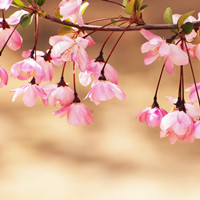
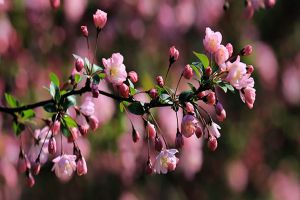
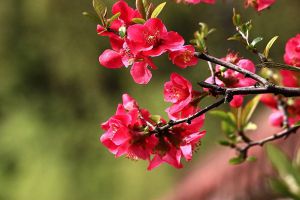
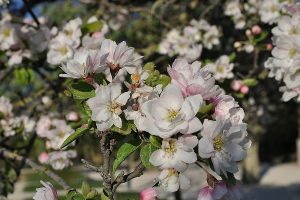
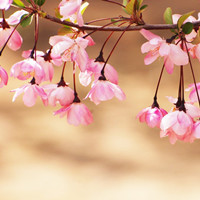
The common woody crabapples mainly include the Siberian crabapple, the hall crabapple, the Japanese flowering quince, and the Chinese quince. The Siberian crabapple has slightly upright flower stalks and deep red buds that open to a mix of pink and white; it is very common in northern gardens. The hall crabapple has slender, drooping flower stalks and flowers that open facing downward; when it blooms in spring, the whole tree is a soft pink, and it is grown more often in the Jiangnan region. The Japanese flowering quince opens its flowers close against the branches and comes in colors such as bright red, pink, and white, with small thorns often present on the branches. The Chinese quince blooms before it leafs out and is fairly cold hardy, making its early spring flowers especially striking.
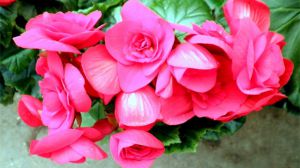
Herbaceous crabapples are collectively called begonias, and common varieties include wax begonia, Rieger begonia, tuberous begonia, and cane begonia. Wax begonia has a long flowering period and is easy to care for, making it suitable for balconies and windowsills. Rieger begonia has large, brightly colored flowers and is a very popular indoor potted flower in winter and spring. Tuberous begonia has a distinctive flower shape and is often used for flowerbed displays and home enjoyment.
Different types of crabapple differ considerably in their habits. Woody crabapples like a sunny environment with good drainage and are suitable for both ground planting and pot cultivation. Herbaceous crabapples mostly prefer warmth and humidity and are afraid of intense sunlight and waterlogging in the pot. When caring for them, you should adjust light and watering according to the variety, supplement nutrients appropriately before flowering, and prune and shape the plant after flowering; this can make the plant more robust and produce even more abundant blooms the following year.
Related Reading