A Detailed Guide to the Care Essentials and Styling Methods for Chinese Fringe-flower Bonsai
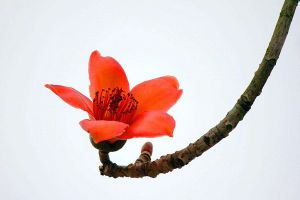
Chinese fringe flower, also commonly written as Loropetalum chinense var. rubrum, is an evergreen shrub or small tree in the witch hazel family (Hamamelidaceae). Its leaves stay purplish-red all year round, and when it blooms, the slender, ribbon-like petals are rose-red and cover the branches so thickly that they are very eye-catching. Its branches are rugged and its bark has an antique look, and both its foliage color and flower color are excellent. It is a common bonsai material in southern China, and can be used both to make small palm-sized bonsai and to grow into medium to large tree-stump bonsai.
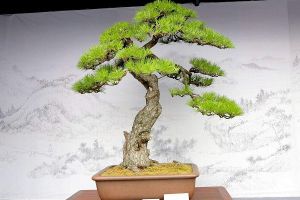
Chinese fringe flower has strong sprouting ability, and its branches are pliable, tolerant of pruning and of wiring. Once its shape is set, the branch pads are compact with clearly defined layers. Its leaf color changes somewhat with light and season; in full sun the leaves are redder and more vivid, and it has ornamental interest in all four seasons. Common styles include the formal upright style, the slanting style, the cascade style and the forest style, and these can be arranged flexibly according to the natural form of the stump material.
In terms of care, Chinese fringe flower likes sunlight and a warm, humid environment. It is best planted in loose, fertile, acidic soil. When watering, follow the principle of watering when dry and letting it dry out between waterings, and avoid long-term waterlogging in the pot. During the growing season, apply light fertilizer frequently to promote lush branches and leaves and bright leaf color. It grows fairly quickly, so it needs frequent pinching and bud removal, and timely pruning of rampant and messy branches, to keep the tree shape attractive.
Every one or two years, repot once in spring before budding, and combine this with repotting to prune the aged roots and renew the growing medium. In summer, during high temperatures and strong light, it can be shaded appropriately; in winter, take care to protect it from the cold and avoid leaving it in a low-temperature environment for long periods. If the leaf color becomes dull or flowering is sparse, it is usually related to insufficient light, improper watering or soil that is too alkaline, and after adjusting the care conditions it can generally recover gradually.
Related Reading