The Alocasia (drip-tip taro) is a common foliage plant, but its toxicity should be kept in mind when caring for it.
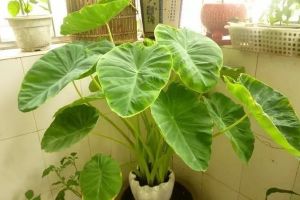
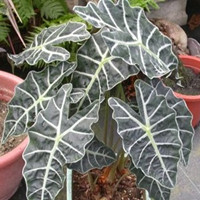
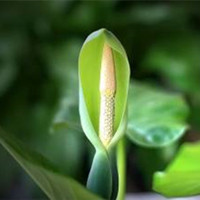
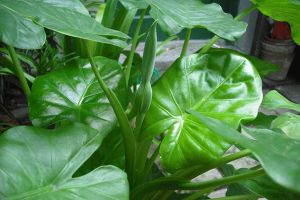
The scientific name of the Alocasia is Alocasia macrorrhizos, a perennial evergreen herbaceous plant of the genus Alocasia in the Araceae family. Its leaves are broad and emerald green, shaped like shields, and the plant stands tall and imposing. When the air humidity is high, water droplets often seep from the leaf tips or margins and drip down, which is how it got the name "drip-tip taro". It is a very popular large indoor foliage potted plant.
In terms of habits, the Alocasia prefers a warm, humid, semi-shaded environment, and dislikes intense direct sunlight; it is also not cold-tolerant, so it should be moved indoors for warmth in winter. It is not particularly demanding about soil, and a loose, fertile, well-draining potting mix is best. It can be grown either in soil or in water.
In daily care, watering should follow the principle of watering when dry and stopping when moist, avoiding long-term water accumulation in the pot, which can easily cause root rot. During the peak growing season, the potting soil can be kept slightly moist, and the leaves and surrounding area should be sprayed with water frequently to increase humidity, which also makes the dripping phenomenon more likely to occur. A position with bright, indirect light is best; long-term darkness will cause the leaf stalks to become thin and elongated and the leaves to droop and turn yellow. If root rot occurs, the plant should be removed from the pot in time, the rotten parts trimmed off, and the soil replaced before replanting.
It is especially important to note that the sap of the entire Alocasia plant contains irritating substances. Skin contact may cause itching, redness and swelling, and ingestion may cause discomfort in the mouth and throat. Its appearance is somewhat similar to taro, but the two are not the same, so it must never be treated as an edible plant. It is best to wear gloves when pruning or repotting. If there are young children or pets at home, it should be placed in a spot that is not easy to touch; there is no need to worry when simply enjoying it.
Related Reading